The best 27-inch monitors for a home office
Twenty-seven inches is the size most home offices settle on — and the size at which resolution stops being a preference and becomes arithmetic. The same diagonal carries 1080p, 1440p or 4K, which is 82, 109 or 163 pixels per inch of the text you will read for eight hours.
By Stephen V.Last reviewed
Compare the four 27-inch monitors
Every cell is the manufacturer's own published figure, cited in the write-up below it. Pixels per inch is the one derived number on this page: the published resolution divided across the published 27-inch diagonal, which is arithmetic rather than a measurement of ours.
| # | Monitor | Resolution | ≈ PPI at 27″ | Height adj | Warranty | Price |
|---|---|---|---|---|---|---|
| 1 | 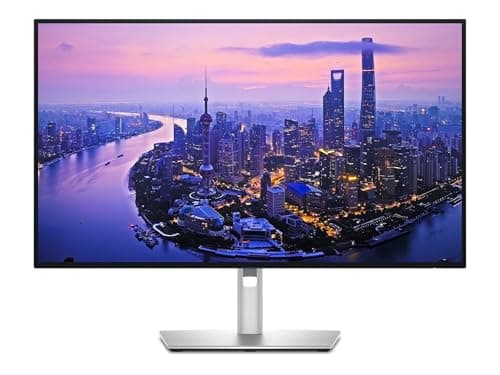 1. Dell UltraSharp 27 4K Thunderbolt Hub Monitor (U2725QE) A 4K grid at 27 inches, and one cable
| 3840 x 2160 | 163 | 5.91" (150 mm) | 3 yr advance exchange | |
| 2 | 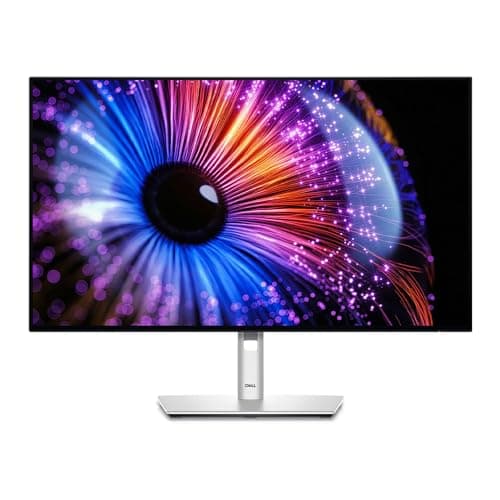 2. Dell UltraSharp 27 Monitor (U2724D) The monitor most 27-inch desks should have
| 2560 x 1440 | 109 | 150 mm | 3 yr exchange + panel | |
| 3 | 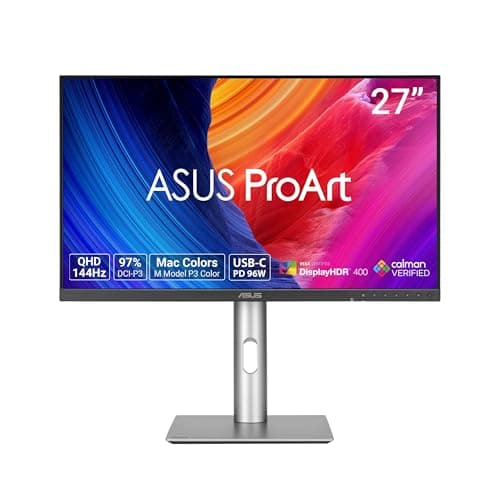 3. ASUS ProArt Display PA278CGRV Colour work and one-cable charging
| 2560 x 1440 | 109 | 0–130 mm | 3 yr zero-bright-dot | |
| 4 | 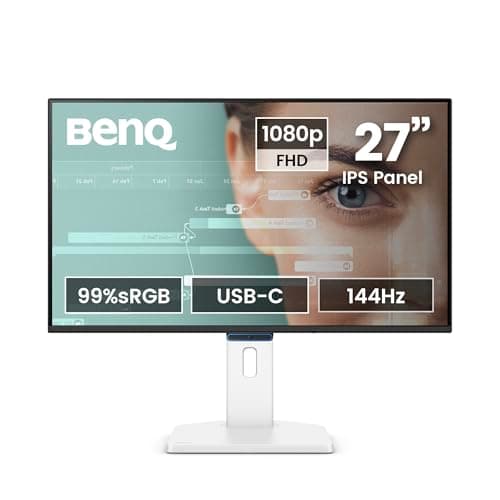 4. BenQ GW2790TC Budget pick — the smallest sensible spend at this size
| 1920 x 1080 | 82 | 150 mm | 3 yr parts, no advance swap |
The PPI column is the page.Nothing else on a 27-inch monitor varies by a factor of two the way the pixel grid does, and no accessory recovers it later — you can add an arm, a light bar or a keyboard tray, but you cannot add pixels. The height column is where the surprise is: the cheapest monitor here publishes the same 150 mm of travel as the two Dells, and the one that gives up 20 mm of it is the mid-priced colour panel. Read the warranty column as a verb, not a number — all four say three years, but only the Dells say the replacement ships first, and BenQ says explicitly that it does not. Every price is read from our live price layer and dated under the picks; prose here carries no dollar figures.
Prices and stock as of November 24, 2026, from Amazon’s API. They change; we show a live number or none at all. #ad — we earn a commission.
Buy the Dell UltraSharp U2725QE if your 27 inches is for text all day and a laptop drives it: it is the only monitor at this size we rank with a 3840 x 2160 grid — roughly 163 pixels per inch — with 150 mm of stand travel and Thunderbolt power delivery rated up to 140W EPR. Most people should buy the Dell UltraSharp U2724D instead: same stand, same advance-exchange warranty, QHD rather than 4K, considerably less money. The budget pick is the BenQ GW2790TC— the cheapest 27-inch monitor here and the only cheap one publishing a full 150 mm of height adjustment, on a 1080p panel.
Why 27 inches changes what you should rank on
Our main monitor roundup ranks the whole field on published stand travel and panel-only weight, because across 24, 27 and 32 inches those are the figures that compare. Fix the diagonal at 27 and that changes. The same 27 inches carries 1920 x 1080, 2560 x 1440 or 3840 x 2160 depending only on which box you buy, and dividing the published resolution across the published diagonal gives roughly 82, 109 and 163 pixels per inch.
That is the only arithmetic on this page, and it is the one number no accessory recovers. A monitor arm fixes height, a light bar fixes glare, a keyboard tray fixes your wrists — nothing adds pixels to a panel you already own. So the published grid is ranked first here, stand travel second, and the warranty’s actual promise third.
How we ranked them
1. Published resolution across the fixed 27 inches. For the reason above. Note that the order it produces is not the order the parent page gives, and not the order the prices give either.
2. Published height adjustment. Second because it decides whether the screen reaches your eye line on the desk you already have. Three of these four publish 150 mm; the ASUS publishes 0–130 mm, and it is the mid-priced pick rather than the cheapest that gives that travel up.
3. What the warranty promises to do.The longevity slot. All four say three years, which makes the term useless as a tie-breaker — so we read the wording instead. Dell publishes Advanced Exchange (replacement ships first) with Premium Panel Exchange on the U2724D; ASUS publishes a zero-bright-dot panel term; BenQ publishes “parts and labor only (No advance replacement)”, which is the same three years spent without a screen.
The USB-C port is not a specification
All four of these have a USB-C or Thunderbolt socket and it does four different things: 140W EPR Thunderbolt docking on the 4K Dell, 96W charging on the ASUS, 20W phone charging on the BenQ, and data only— no video, no power — on the QHD Dell. The port shape tells you nothing. If one-cable docking is why you are buying a monitor, read the power-delivery figure on the spec sheet and nothing else, because two of these four will disappoint you and one of them is the model most people would otherwise pick.
What a 27-inch monitor still needs from the desk
Two things, and neither is in the monitor’s box. It needs viewing distance— roughly an arm’s length, which a shallow desk does not give you with the stand attached, and which is the best argument for a monitor arm at this size. And it needs its published panel weightchecked against that arm’s published range before you buy either: 9.90 lb labelled panel-only on the U2724D, 11.51 lb approximate on the U2725QE, 4.7 kg on the ASUS and 4.2 kg on the BenQ. How much a monitor weighs is why that figure is published so inconsistently.
What we can’t tell you
We have not lived with these four. We cannot tell you how the IPS Black panels hold up over three years, whether the ASUS’s 130 mm stand feels short at your desk, how either Dell’s advance exchange is administered in practice, or whether 1080p at 27 inches will bother you specifically. What this page is, is every figure the four makers publish, ranked on the one the size makes decisive, with the derived arithmetic shown so you can check it. Our methodology says where that evidence stops.
The picks, in detail
1. A 4K grid at 27 inches, and one cable
Dell UltraSharp 27 4K Thunderbolt Hub Monitor (U2725QE)
The only 27-inch monitor we rank that puts 3840 x 2160 on the panel — roughly 163 pixels per inch against 109 for the QHD picks — with the full 150 mm of stand travel and Thunderbolt power delivery Dell rates up to 140W EPR.
- Height adj
- 5.91″
- Panel wt
- 11.51 lb
- Warranty
- 3 yr exchange
This is first because of arithmetic rather than opinion. At a fixed 27 inches, 3840 x 2160 is the finest pixel grid anything in our registry puts on this diagonal, and it is the one figure that cannot be recovered later with an arm, a lamp or a better chair. Dell pairs it with 120 Hz on an IPS Black panel and the same 5.91″ (150 mm) of adjustable height as the rest of the UltraSharp line.
The second reason is the cable. Thunderbolt power delivery up to 140W EPR means video, data and laptop charging down one lead, which is the difference between a docking monitor and a screen with a hub bolted on. Dell publishes 3 years of limited hardware cover with Advanced Exchange Service — the replacement ships before the faulty unit goes back.
The honest catch is that Dell does not label a panel-only weight here the way it does on the U2724D. It prints “Weight (Approximate)” 11.51 lbbeside 15.56 lb with the stand; we read the smaller figure as the head and we are telling you it is not labelled. Check it against your arm’s published range — VESA and weight ratings explains why that number, not the diagonal, decides what an arm can hold.
Good
- Thunderbolt power delivery “up to 140W EPR” — video, data and laptop charging over one cable, which is the entire reason to pay the difference over the U2724D
- 3840 x 2160 at 120 Hz on IPS Black. At 27 inches that is the pixel density the QHD picks here cannot match, and the refresh rate is unusually high for a docking monitor
- Same 5.91″ (150 mm) maximum adjustable height as the rest of the UltraSharp picks, with -5° to 21° tilt, ±45° swivel and ±90° pivot
- 3 Years Limited Hardware and Advanced Exchange Service — the replacement ships first, same as the U2724D
- Turning a laptop into a desktop with one plug is what removes the cable nest under most home desks in the first place; it is a monitor that does some of the job a whole hub and charger would otherwise do
Not so good
- Roughly twice the price of the U2724D and several times the cheapest monitor here. The 4K panel and the Thunderbolt hub are both real, and you are paying for both whether you use both or not
- Dell does not label a panel-only weight on this page. It prints “Weight (Approximate)” 11.51 lb beside “Weight with Stand (Approximate)” 15.56 lb — we read the smaller number as the head, and we are telling you it is not labeled the way the U2724D's is
- 11.51 lb puts the head in the upper half of the narrowest arm range we have ranked (4.4–15.4 lb on the cheapest gas-spring arm on this site), so it is worth checking your arm's published range rather than assuming — which Dell's vaguer weight label here makes harder than it needs to be
- One Thunderbolt cable means one point of failure for power, video and every peripheral hanging off the monitor. When it goes, everything goes at once
- It is a 27-inch screen at a 32-inch price. If sheer area is what you want rather than density and docking, the ProArt 32 further down gives you more of it for less
Don’t buy it if: your computer is a desktop tower. The Thunderbolt hub is most of this monitor's premium and a tower does not need it — you would be buying a docking station you will never dock anything to. The U2724D has the same stand and the same warranty for a lot less.
Price as of November 24, 2026. #ad — we earn a commission.
2. The monitor most 27-inch desks should have
Dell UltraSharp 27 Monitor (U2724D)
The 27-inch default: 2560 x 1440 at 120 Hz, 150 mm of stand travel, a panel-only weight Dell actually labels as such, and advance-replacement cover with a separate panel guarantee. Its USB-C port is marked data only.
- Height adj
- 150 mm
- Panel wt
- 9.90 lb
- Warranty
- 3 yr + panel
Second on the grid and first on documentation. 2560 x 1440across 27 inches is the density this whole category is built around — sharper than 1080p by a wide margin, and the step most people will not pay double to leave. Everything around it is published and checkable: 150 mm (5.9″) of height travel, -5°/+21° tilt, ±45° swivel and ±90° pivot, so it turns portrait without an arm.
Dell also prints the figure almost nobody else labels: “weight (panel only — for VESA mount)” 9.90 lb, against 14.46 lb with the stand. And the warranty says what it will do rather than only how long it lasts — 3-Year Advanced Exchange plus Premium Panel Exchange.
Then the trap, and it is a real one: the upstream USB-C port is listed by Dell as data only. It carries no video and charges no laptop. If one-cable docking is the point of the purchase, the 4K pick above is the model in this line that does it and this one is not.
Good
- 150 mm (5.9″) of height travel, the most on this page alongside the other Dells and the BenQ — enough range that the top of the screen can be brought to or below your seated eye line instead of you adapting to it
- Dell publishes the number a monitor arm actually needs and labels it plainly: “weight (panel only - for VESA mount)” 9.90 lb, against 14.46 lb with the stand. Almost nothing else in the category is that explicit
- Full rotation set — -5°/+21° tilt, ±45° swivel, ±90° pivot — so it turns portrait without an arm, which matters if you read long documents or code
- 3-Year Advanced Exchange Service plus Premium Panel Exchange: Dell ships the replacement before you send the old one back, and the panel term is separate cover for the part most likely to fail visibly
- 2560 x 1440 at 120 Hz on an IPS Black panel, with an ambient light sensor Dell describes as “auto brightness and color temperature adjustment” — the same idea as the lamp half of a well-lit desk, handled by the screen
Not so good
- The USB-C upstream port is listed by Dell as “data only”. It will not carry video and it will not charge a laptop. If you want one cable to your laptop, this is the wrong model in the line and the U2725QE below is the right one
- QHD, not 4K. At 27 inches that is a visibly coarser pixel grid than the 4K picks here, and no amount of stand travel changes it
- Using the built-in USB hub means running a second cable to the computer alongside the DisplayPort or HDMI lead, because the upstream port is data only. “Fewer cables” is not one of the reasons to buy this one
- Dell's page states the panel is “certified by TÜV for 5-star eye comfort” but publishes no flicker specification of its own, so the eye-comfort claim rests on the certificate rather than on a figure you can compare
- It is a plain gray office monitor with no speakers worth the name. Nobody buys this one for the look of it
Don’t buy it if: you want to run your laptop down one cable. Dell marks this model's USB-C upstream port “data only”, so the video still has to come over DisplayPort or HDMI and the laptop still needs its own charger. Buy the U2725QE for that, or accept two cables and save the difference.
Price as of November 24, 2026. #ad — we earn a commission.
3. Colour work and one-cable charging
ASUS ProArt Display PA278CGRV
The same 2560 x 1440 grid as the Dell above with 96W of USB-C power delivery and published gamut figures — bought with 20 mm less stand travel, which is the one spec on this page you cannot add later.
- Height adj
- 0–130 mm
- Panel wt
- 4.7 kg
- Warranty
- 3 yr ZBD
Third, and the pick if your 27 inches has to do colour work. ASUS publishes what most makers in this bracket will not print anywhere: 100% sRGB, 97% DCI-P3, “Flicker-free: Yes” as a spec line rather than a slogan, a 144 Hz ceiling, and 96WUSB-C power delivery — one cable to a laptop at a fraction of the Thunderbolt Dell’s price. It even states the panel weight in both units unprompted: 4.7 kg (10.36 lbs) without the stand.
What it gives up is height. Stand travel is 0–130 mm, 20 mm short of every other pick here, and swivel is ±30°against the Dells’ ±45°. On a fixed desk the stand is the only height adjustment you have, so that shortfall is the difference between reaching your eye line and living below it. The monitor height guide is how to work out whether 130 mm is enough for you before you buy.
Good
- ASUS publishes the gamut numbers plainly — “Color Space (sRGB) : 100%” and “Color Space (DCI-P3) : 97%” — which is more than most makers in this bracket print anywhere
- 96W USB-C power delivery: one cable to a laptop, at a fraction of the Thunderbolt Dell's price
- “Net Weight without Stand : 4.7 kg (10.36 lbs)” — published in both units, unprompted, which is exactly the number an arm needs
- “Flicker-free : Yes” and “Low Blue Light : Yes” as explicit spec-sheet lines rather than marketing prose, and a 144 Hz maximum refresh rate that a 60 Hz office panel cannot match
- The LCD ZBD warranty is published as three years — zero bright dot, which is a stated panel-defect promise rather than a general hardware term
Not so good
- Height adjustment is “0~130mm”, 20 mm less travel than the Dells and the BenQ. On a tall desk or for a tall sitter that is the difference between reaching your eye line and not
- Swivel is +30°/-30° against the Dells' ±45°, so it turns less far toward a second person or a second screen
- QHD at 27 inches, same pixel density as the U2724D — this is not the pick if you want 4K text
- ASUS publishes the three-year term as an “LCD ZBD Warranty” on the spec sheet rather than spelling out a full advance-exchange service the way Dell does. Read what your retailer's service actually includes before you count on it
- At 6.6 kg with the stand it is a solidly heavy 27-inch monitor, and the color-work positioning means you are paying something for gamut coverage you may never use for spreadsheets
Don’t buy it if: you are tall, or your desk is fixed and high. 130 mm of travel is the shortest here, and on a desk you cannot lower, the stand is the only adjustment you have. Either take one of the 150 mm picks or budget for an arm on day one.
Price as of November 24, 2026. #ad — we earn a commission.
4. Budget pick — the smallest sensible spend at this size
BenQ GW2790TC
Budget pick. The cheapest 27-inch monitor we rank and the only cheap one with a full 150 mm stand rather than a tilt-only base — on a 1920 x 1080 panel, which is the honest reason it costs what it does.
- Height adj
- 150 mm
- Panel wt
- 4.2 kg
- Warranty
- 3 yr parts
This is the budget pick, and it is a genuinely good one for a reason that has nothing to do with the panel: it publishes 150 mm of height adjustment, the same travel as the UltraSharps, at a fraction of the money. Height is the spec that usually vanishes first when a monitor gets cheap. Tilt runs -5° to 35°, a wider forward-and-back range than any Dell here, and BenQ lists its TÜV certificates explicitly — Eye Comfort 3.0, EyeSafe 2.0, Low Blue Light — alongside flicker-free operation.
The trade is the grid, and at this size it is the whole trade. 1920 x 1080 across 27 inches is roughly 82 pixels per inch: text is simply softer than on the QHD picks above, all day, every day. Two smaller caveats are worth knowing before you click. USB-C power delivery is 20W— a phone, not a laptop. And BenQ’s warranty page states “parts and labor only (No advance replacement)”, so a failure means being without the screen while it is repaired.
Good
- 150 mm of height adjustment at the cheapest price on this page — the spec that usually disappears first when a monitor gets cheap, and the one that decides whether it fits you
- Tilt runs -5˚ to 35˚, a wider forward-and-back range than any Dell here, plus 45˚/45˚ swivel and 90˚ pivot
- TÜV certificates listed explicitly on the spec page — Eye Comfort 3.0, EyeSafe 2.0 and Low Blue Light — alongside “Flicker-free Technology”, which for a budget panel is more disclosure than the category norm
- Three years of parts and labor, published on BenQ's own US warranty page, on a monitor that costs a fraction of the UltraSharps
- 4.2 kg without the base — roughly 9.3 lb by our conversion — so a mid-range arm handles it comfortably
Not so good
- 1920 x 1080 across 27 inches. That is the coarsest pixel grid on this page by a distance, and no feature list compensates: text is simply softer than on the QHD and 4K picks
- USB-C power delivery is 20W. That charges a phone, not a laptop — do not buy this expecting one-cable docking
- BenQ's warranty page states “parts and labor only (No advance replacement)”, so a failure means being without your screen while it is repaired, unlike Dell's advance-exchange service
- BenQ publishes the weight without the base in kilograms only on the US spec page, so the pound figure you need for an arm's rating is a conversion you (or we) have to do
- The spec page publishes no warranty period at all — you have to go to a separate warranty page to find the three-year term, which is a documentation gap even though the answer is a good one
Don’t buy it if: you read text all day and you can stretch. 1080p at 27 inches is the compromise in this monitor, and it is the one you will look at for eight hours. The U2424H gives you the same resolution on a smaller, sharper screen; the U2724D gives you a sharper one at the same size.
$179.99 −17%
Price as of November 24, 2026. #ad — we earn a commission.
Where these numbers came from
- BenQ GW2790TC Specifications — BenQ's own US spec page (source of the 27″ IPS panel, 1920x1080 at 144 Hz, the “Height Adjustment : 150 mm”, the -5˚–35˚ tilt, 45˚/45˚ swivel and 90˚ pivot, the 100x100 mm VESA wall mount, the 6.7 kg net weight and 4.2 kg net weight without base, the 20W USB-C power delivery, the TÜV Eye Comfort 3.0 / EyeSafe 2.0 / Low Blue Light certificates and Flicker-free Technology; the spec page states no warranty period) — read 2026-09-15
- BenQ GW2790TC Warranty — BenQ's own US warranty page (“Three (3) year from the purchase date by the original retail purchaser”, “parts and labor only (No advance replacement)”) — read 2026-09-15
Common questions
Is 1440p or 4K better on a 27-inch monitor?
On the published numbers, 4K puts roughly 163 pixels per inch on a 27-inch panel and QHD puts roughly 109. Both are comfortable for text at a normal desk distance; 1080p at this size is about 82, which is the one most people notice. The practical answer is that QHD is the density this size was built around and 4K is the upgrade you pay roughly double for, so the real question is whether you also want the Thunderbolt dock that comes attached to the 4K pick here. What size monitor you need works the other direction — from your desk depth to the diagonal.
Is a 27-inch monitor too big for a home office desk?
It depends on one measurement, and it is your desk’s depthrather than its width: a 27-inch screen wants roughly an arm’s length of viewing distance, and a 24-inch-deep desk with the monitor on its stand puts the panel closer than that. How far a monitor should be from your eyes has the figures, and how deep a desk should be is the other half. If the depth is fixed and short, a monitor arm buys back several inches by removing the stand footprint entirely.
Do I need 150 mm of stand height adjustment?
You need enough that the top of the screen lands at or slightly below your seated eye level, which is how OSHA’s own computer-workstation material describes a monitor’s position. Three of these four publish 150 mm and one publishes 130 mm; whether the shorter one is enough depends entirely on your desk height and your seated eye line, not on the monitor. Matching desk and chair height is where to get your own figure. On a desk you cannot lower, assume you need all the travel you can get.
Which 27-inch monitor works best with a laptop?
The one whose USB-C or Thunderbolt port actually carries power, and that is not a given even inside one brand’s line. Of these four: the 4K Dell publishes Thunderbolt delivery up to 140W EPR, the ASUS publishes 96W, the BenQ publishes 20W(a phone), and the QHD Dell’s upstream USB-C is marked data only — no video, no charging. Whether you need an external monitor for a laptop covers the decision before this one, and cable managing a laptop dock covers what the one-cable setup actually looks like under the desk.
Sources
Every figure on this page comes from one of these. If a manufacturer doesn’t publish a number, we print “—” rather than estimate it.
- Dell UltraSharp 27 4K Thunderbolt Hub Monitor — U2725QE, Dell's own US product page (source of the 3840 x 2160 at 120 Hz IPS Black panel, the 5.91″ maximum adjustable height, the -5° to 21° tilt, -45° to 45° swivel and -90° to 90° pivot, the 100 x 100 VESA pattern, the “Weight (Approximate)” 11.51 lb and “Weight with Stand (Approximate)” 15.56 lb figures, Thunderbolt power delivery “up to 140W EPR”, and the 3 Years Limited Hardware and Advanced Exchange Service) — read 2026-09-15
- Dell UltraSharp 27 Monitor — U2724D, Dell's own US product page (source of the 2560 x 1440 at 120 Hz IPS Black panel, the 150 mm maximum adjustable height, the -5°/+21° tilt, -45°/+45° swivel and -90°/+90° pivot, the 100 mm x 100 mm VESA pattern, the 9.90 lb “weight (panel only - for VESA mount)” and 14.46 lb weight with stand, the port list including “1 x USB-Type C upstream port (data only)”, the ambient light sensor, the TÜV 5-star eye comfort certification, and the 3-Year Advanced Exchange Service with Premium Panel Exchange) — read 2026-09-15
- ASUS ProArt Display PA278CGRV — ASUS's own US technical specification page (source of the 27″ IPS panel, 2560x1440 at a 144Hz maximum refresh rate, the “Color Space (sRGB) : 100%” and “Color Space (DCI-P3) : 97%” figures, the “Height Adjustment : 0~130mm”, the +23°/-5° tilt, +30°/-30° swivel and +90°/-90° pivot, the 100x100mm VESA pattern, the 6.6 kg (14.55 lbs) net weight and 4.7 kg (10.36 lbs) net weight without stand, the 96W USB-C power delivery, “Flicker-free : Yes”, “Low Blue Light : Yes”, and “LCD ZBD Warranty : Yes(3 yr)”) — read 2026-09-15
- BenQ GW2790TC Specifications — BenQ's own US spec page (source of the 27″ IPS panel, 1920x1080 at 144 Hz, the “Height Adjustment : 150 mm”, the -5˚–35˚ tilt, 45˚/45˚ swivel and 90˚ pivot, the 100x100 mm VESA wall mount, the 6.7 kg net weight and 4.2 kg net weight without base, the 20W USB-C power delivery, the TÜV Eye Comfort 3.0 / EyeSafe 2.0 / Low Blue Light certificates and Flicker-free Technology; the spec page states no warranty period) — read 2026-09-15
- BenQ GW2790TC Warranty — BenQ's own US warranty page (“Three (3) year from the purchase date by the original retail purchaser”, “parts and labor only (No advance replacement)”) — read 2026-09-15
Read next
The best home office monitors
The unbounded roundup across 24, 27 and 32 inches, where all four of these are researched in full against the rest of the field.
The best home office monitors under $400
The same field cut by price instead of size — useful if the budget, not the diagonal, is what is fixed.
What size monitor do you need?
The decision before this one: whether 27 inches is the right diagonal for your desk depth at all.
The best monitors for eye strain
The same field ranked on published flicker and blue-light documentation rather than on the pixel grid.