Chairs
Chairs
The chair is where the eight hours actually happen. Almost every 'best chair' list ranks comfort, which nobody can measure for you. We rank the adjustment ranges, because those decide whether a chair fits your body at all.

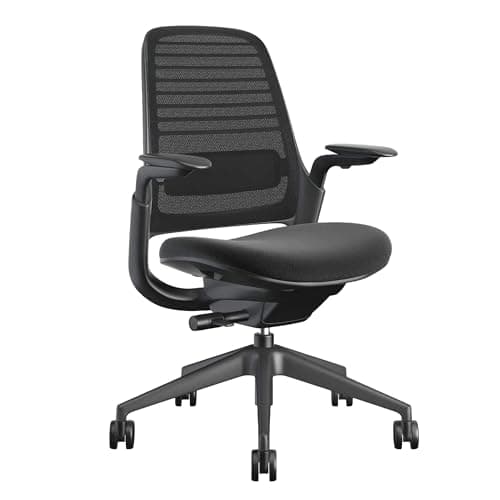
Best Ergonomic Chair
The best ergonomic office chairs
Six chairs on published seat height, capacity and warranty — including the three that don't publish a seat height at all.
Top pick: Steelcase Series 1
Best for Long Days
The best chairs for sitting all day
Three chairs judged on adjustment range and the cylinder warranty — including the one whose "Lifetime" turns out to mean twelve years where it counts.
Top pick: Steelcase Series 1
Compared
Task chair vs office chair
The two words are not two products. The real difference is the control mechanism — and it is the one thing the label never tells you.
Compared
Mesh vs foam seats
Largely a preference, and we can't test preference. But the standard excludes both materials from its scope, and the warranties are unexpectedly revealing.
Guide
What lumbar support actually does
The mechanism, described as geometry rather than medicine — and why an adjustable support beats a shaped one for reasons you can check yourself.
Guide
How much should you spend on a chair
What the extra money buys is documentation and warranty tier — from a 12-year parts-and-labor PDF down to a sentence on a homepage.
Guide
How to adjust your chair
The sequence, in order, using OSHA's own fit test — and the reason the last step is a footrest rather than a lower seat.
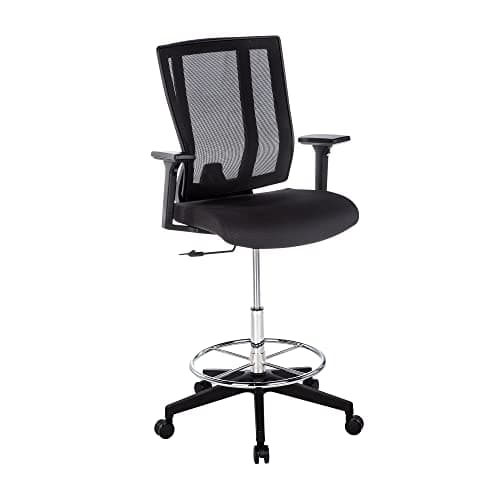
Best Drafting Chair
The best drafting chairs for a standing desk
Five drafting chairs ranked on published seat-height range, weight capacity and warranty — including the arithmetic showing which ones actually clear a standing-height desk, and the two Boss siblings whose own manufacturer pages disagree on how high each one goes.
Top pick: Vari Drafting Chair
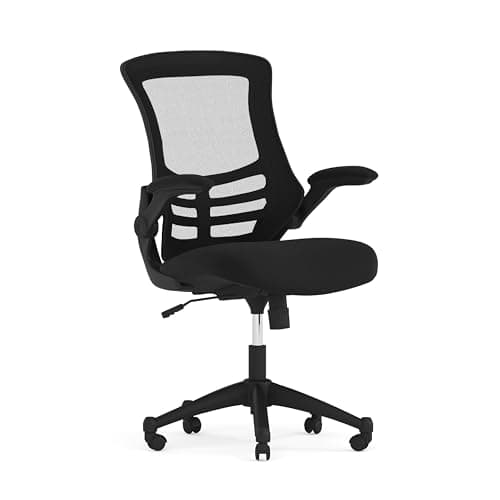
Best Budget Chair
The best office chairs under $200
Five chairs under $200 on published seat height, weight capacity and warranty — where only one of the five publishes a seat height at all, and warranty length is what actually separates the rest.
Top pick: Flash Furniture Kelista Mid-Back Mesh Office Chair
$134.94Amazon$153.00 −12%
Compared
Gaming chair vs office chair
A racing bucket versus a task-chair mechanism, compared on published specs rather than looks — recline, lumbar approach, arms, materials, and testing claims.
Guide
Why does my office chair keep sinking?
The pneumatic gas cylinder loses its seal and can no longer hold pressure. Here is the mechanism, how to confirm it's the cylinder and not the lever, the hose-clamp bridge fix, and what a real repair involves.
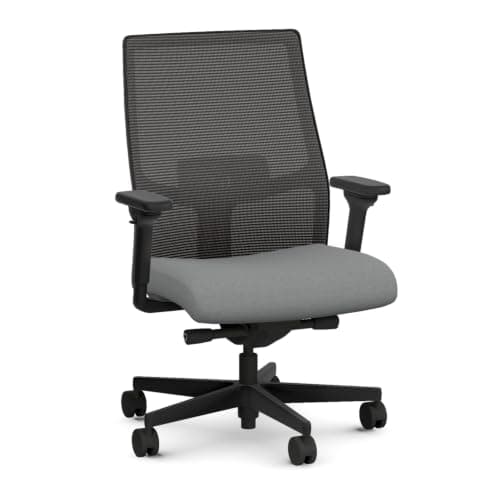
Best Chair for Tall People
The best office chairs for tall people
Four Big and Tall chairs ranked on published maximum seat height and weight capacity, not the marketing label — including the one whose own spec sheet tops out lower than its standard chair.
Top pick: HON Ignition 2.0 Big and Tall (HIWM8)
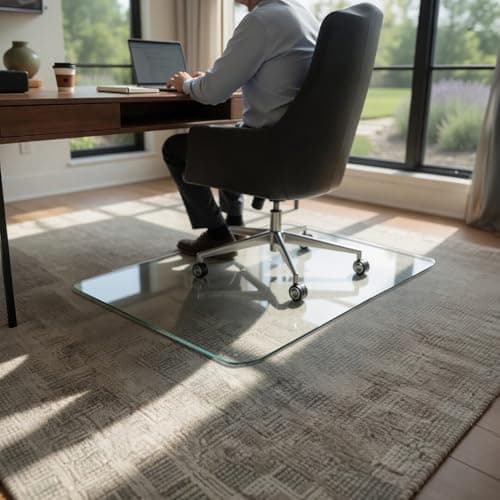
Best Chair Mat
The best office chair mats for carpet and hard floors
Five chair mats ranked on floor-type match, thickness and warranty - including the one mat here that sidesteps carpet-vs-hardwood entirely, and the manufacturers whose own instructions say exactly where not to put their mat.
Top pick: Vitrazza Glass Chair Mat (36″ x 48″, Chiaro Clear)
Guide
How to choose an office chair
The six specs that decide whether a chair fits your body — ranked by adjustment range, because comfort is the one thing we can't measure for you.
Guide
When to replace your office chair, and when to fix it
Which chair faults are a cheap part swap — a sinking cylinder, worn casters — and which mean the frame or the fit is finished, triaged against BIFMA testing and warranty tiers.
Guide
What office chair armrests are actually for
2D, 3D and 4D are directions an armrest can move, not a ranking. What each one adds, why height does most of the work, and when a wrong armrest is worse than none.
Guide
Do office chairs need a headrest?
A headrest earns its place only if you actually recline through the day. At an upright typing posture a fixed one can push the head forward, the opposite of neutral.
Compared
Mesh vs leather office chairs
Breathability, contour, and how each ages over three years — plus the labeling trap that 'leather' hides. Neither is universally better.
Guide
Office chair tilt tension, explained
What the tilt-tension knob does, tilt-lock vs synchro vs knee tilt, and how to set the recline for your weight — plus the fixes for too loose and too tight.
Guide
Office chair weight capacity, explained
What the rating means, why it is about safety and durability rather than a hard maximum, and why the cylinder and base are the real limit — not the seat.
Guide
How to clean an office chair
The routine material by material — mesh, fabric, PU, real leather, plastic and the base — plus the mistakes (soaking mesh, solvents on PU) that ruin a chair.
Guide
Seat depth: why it matters and how to set it
The backrest-to-front-edge distance, the gap-behind-the-knee rule, and why a too-deep pan quietly wastes every other adjustment on the chair.
Compared
Office chair vs executive chair
Executive chairs sell presence; ergonomic task chairs sell adjustability. Which one you need comes down to how many hours a day it has to hold you — and who sees it.
Guide
The best office chairs for short people
A fit guide for short and petite users: minimum seat height, seat depth and the waterfall edge, and when a footrest beats a new chair — routing you to the right roundup.
Guide
How to make an office chair more comfortable
The order that fixes an uncomfortable chair: adjust what you own first, add lumbar or seat support only where it is missing, keep moving — and replace only when the chair is the fault.
Guide
Why does my office chair recline too far?
A chair that reclines too easily is usually tilt tension set too low or an open tilt lock — both free fixes. How to tell which, fix each, and rule out the sinking-seat impostor.
Compared
Leather vs fabric office chairs
Leather (and PU faux) seals the seat; woven fabric breathes but pills and stains. Breathability, how each ages, cleaning, feel and cost — feature by feature, honestly.
Guide
Office chair casters for hardwood vs carpet
Soft polyurethane casters for hard floors, harder ones for carpet, and when a chair mat beats swapping wheels at all. Plus how to confirm the stem fits before you buy.
Guide
How to stop an office chair from squeaking
Isolate the squeak — cylinder, tilt mechanism, casters, or a loose bolt — then tighten, lubricate, or clean the right part. Plus the noise that means the chair is worn out.
Compared
Ergonomic chair vs kneeling chair
A conventional task chair supports your back and adjusts to fit; a kneeling chair opens the hip angle and shares weight onto your shins, with no backrest. The real differences, honestly.
Guide
How to tell if an office chair is good quality
The verifiable signals of a good chair: BIFMA X5.1 testing, a long parts-naming warranty, a metal five-star base, independent adjustments, a rated cylinder, an honest weight capacity, and replaceable parts.
Compared
Office chair vs stool for a desk
A full task chair gives back support, recline, and all-day comfort; a stool gives active sitting, easy movement, and a small footprint that pairs with a sit-stand desk. Feature by feature, honestly.
Guide
How to choose an office chair for back pain
Why fit and changing posture matter more than price or a posture label when back comfort is the concern -- seat height, lumbar, seat depth, and armrests, attributed to OSHA, CCOHS, and Cornell, with no medical claims.
Guide
How to break in a new office chair
What break-in really means (foam softens, mesh does not), why day-one discomfort is usually a fit problem, and a routine: adjust to your body first, build up sit time, let the seat settle, then re-check. Attributed to OSHA and CCOHS.
Compared
Office chair wheels vs glides
Wheels roll to reach across the desk; glides are stationary feet that stop the chair drifting on a hard, slick floor. When to swap, when locking casters split the difference, and who each is for.
Compared
High-back vs mid-back office chair
A high-back chair supports the upper back and shoulders and often adds a headrest; a mid-back is lighter and freer and suits upright task work. Why back height is a recline and fit question, not more support.
Compared
Synthetic vs genuine leather office chairs
Coated synthetic (PU, bonded, faux, vegan) vs real top-grain hide. Synthetic is cheaper and wipes clean but can crack and peel; genuine costs a premium but ages. Why bonded leather is the least durable of the three.
Guide
How long do office chairs last?
Qualitative lifespan bands by build tier, what fails first — cylinder, foam, casters, mesh — and why the warranty is the closest thing to an honest years figure.
Guide
How to replace office chair casters
The standard 11 mm grip-ring stem versus threaded stems, the pull-out method, choosing casters by floor surface, and whether rollerblade casters are worth it.
Guide
How to replace an office chair gas cylinder
Confirm the cylinder is the fault, understand Class 3 and Class 4 ratings, knock the old one free with a mallet or pipe wrench, match diameter and stroke, and know when to replace the chair.
Guide
How to add lumbar support to an office chair
Set the built-in lumbar and seat depth first, then add an external pillow or strap only if a properly adjusted chair still leaves a gap. Evidence-honest, no medical claims.
Compared
Steelcase Series 1 vs Gesture
Same 400 lb rating, same 12-year parts-and-labor warranty, roughly triple the price — and only the cheaper chair publishes a seat height. What the Gesture's extra money actually buys, from Steelcase's own cut sheets.
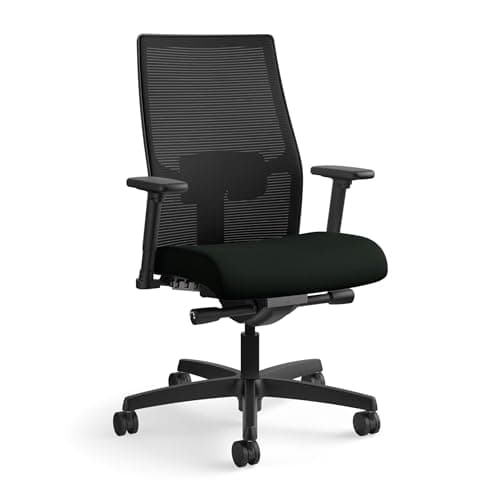
Best Mesh Chair
The best mesh office chairs
Four mesh-backed chairs ranked on published seat height, published capacity and published warranty — from a lifetime term at 300 lb down to a one-year term at 250 lb. The mesh itself is the one thing nobody can rank.
Top pick: HON Ignition 2.0 (mid-back mesh)
Best Chair Under $500
The best office chairs under $500
Five chairs inside $500, ranked on published seat height, capacity and warranty — 400 lb and 12 years of parts and labor at the top of the band, 330 lb for a fraction of it at the bottom.
Top pick: Steelcase Series 1
Compared
Branch Ergonomic Chair vs Ergonomic Chair Pro
Same 275 lb rating, same 7-year term, same unpublished seat height — the Pro's premium is 14 points of adjustment and 5D armrests. Whether that is worth it, from Branch's own figures.
Guide
What an office chair warranty actually covers
One maker publishes a lifetime headline with 12-year and 5-year component tiers underneath. Another publishes five years with no terms document anywhere. The four questions to ask of any chair warranty before the number.
Best Office Chair by Published Capacity
The best office chairs for heavy people
450 lb, 400 lb weight-tested, 400 lb and 330 lb — ranked on published capacity, with the warranty tier that covers the cylinder. And the Big and Tall chair whose seat sits lower than the standard model's.
Top pick: HON Ignition 2.0 Big and Tall (HIWM8)
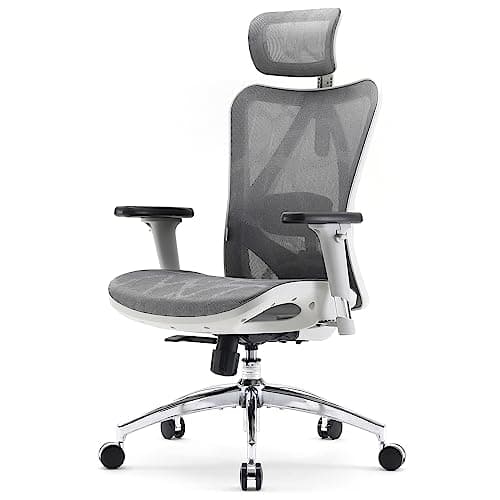
Best Chair With a Headrest
The best office chairs with a headrest
Four chairs with headrests, ranked on whether the maker publishes what the headrest does — 3.9″ of travel and 45° of rotation at the top, the word "adjustable" and nothing else at the bottom.
Top pick: SIHOO M57 (Big and Tall, 330 lb)
$199.99Amazon$249.99 −20%
Start with the seat height, not the comfort
Almost every chair roundup ranks comfort. Comfort is the one thing a reviewer cannot measure for you: it depends on your height, your weight, your desk and how you sit. “We sat in forty chairs and liked this one” tells you how a stranger’s body responded to a chair, which is close to no information at all.
What can be checked is whether a chair can fityou, and that is prior to whether it is comfortable. Your chair needs to put your elbows level with your desk while your feet stay flat on the floor. OSHA describes the test without a single number: the height is right “when the entire sole of the foot can rest on the floor with the back of the knee slightly higher than the seat of the chair.” That gives you a target, and the target gives you a shortlist.
The awkward thing we found
Half the category will not tell you the seat height.
Three of the six chairs in our roundup do not publish a seat-to-floor measurement anywhere. One of them publishes two otherheights — an overall chair height and a “back lifting height” — either of which looks exactly like a seat height if you are skimming, and both of which measure to the top of the backrest instead.
Which means that if you are outside the average range, your real choice is narrower than the market looks. Not because the other chairs are bad, but because they declined to answer the question.
What “BIFMA certified” does not mean
It does not mean ergonomic. ANSI/BIFMA X5.1’s own scope says the standard “does not address ... ergonomic considerations” — in those words. It is a safety and durability standard: drop tests, 100,000 seating cycles, swivel tests, structural loads. Genuinely useful, and it tells you nothing whatsoever about whether the chair suits your body.
Worth knowing too that of the six chairs we checked, not one publishes a clean X5.1 certification claim. Some say “BIFMA compliant”, some say “meets BIFMA standards” with no standard number, and two say nothing at all.
What the money buys
Documentation and warranty tier, mostly — and the gap is stark. One chair on our list publishes “12-year, multi-shift, 24/7, both parts and labor” in a PDF, with the lumbar travel and the arm adjustment specified to the quarter-inch. Another’s five-year warranty is a sentence on a homepage, and its warranty page turns out to be an email-capture form with no terms on it at all.
It also does not scale the way the price does. Two chairs from the same maker — the Steelcase Series 1 against the Gesture — publish the same 400 lb rating and the same 12-year parts-and-labor term about a thousand dollars apart, and it is the cheaper one that publishes a seat height at all.
Both would read as “a warranty” in a comparison table. They are not the same kind of object, and that is most of what you are paying for.
Below about two hundred dollars the same trade-off gets sharper, which is why the budget brackethas its own page — and the one component that fails at every price, the pneumatic cylinder, is why a chair starts to sink.
Before you buy anything
Set your desk height first — the chair is adjusted from the desk, not the other way round, which is why the calculator comes before the shopping. Then adjust the chair in the right order: height, then depth, then lumbar, then arms, then recline. Most people start with the backrest, which is last.
And a note on what we can’t help with: we have not sat in any of these. We cannot tell you whether the mesh digs in at hour four or the cylinder sinks in year two. A generous return window is often worth more than a warranty for exactly that reason — it answers the comfort question with your own body inside a fortnight. Our methodology is honest about the rest.
Two fit questions get their own pages. If a standard chair has never sat high enough or felt sturdy enough for you, the chairs for taller and heavier bodies are ranked on published max seat height and weight capacity; and whatever chair you land on, a chair mat matched to your floor keeps it rolling without chewing up the carpet or scratching the hardwood.
Three chair pages take the question from a different angle: the best chairs under $500, where two of the five publish a seat height and three do not; the best mesh chairs, which begins by explaining why no mesh has a published durability figure at all; and Branch’s own two chairs head to head, where the same rating and the same warranty sit on both sides of a price gap.