The best standing desks for tall people
Most standing-desk lists rank how low a desk comes down. For a tall user that is the wrong end of the range — the number that runs out is the ceiling. We ranked these four on published maximum height, and the spread is smaller than you'd hope.
By Stephen V.Last reviewed
Quick picks
Ranked, with the manufacturer’s own longevity figure next to each one. Tap a row to jump to the full write-up.
| # | Product | Best for | Longevity | Price |
|---|---|---|---|---|
| 1 | 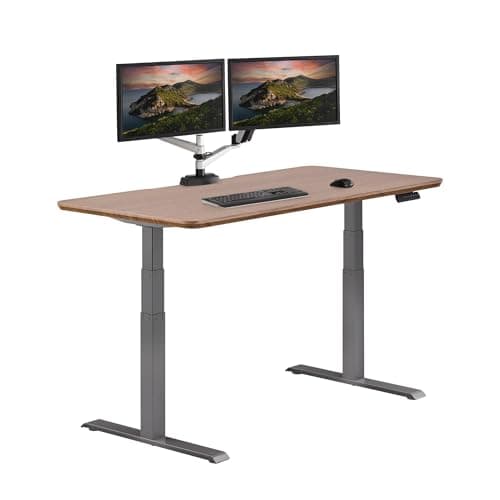 Vari Classic Electric Standing Desk 60x30 The tallest published surface height we can verify on Amazon — 50.5 inches — and a lifetime warranty. The catch a tall buyer has to weigh: it also has the lowest weight capacity here. | The highest verified surface | LifetimeWarranty | |
| 2 | 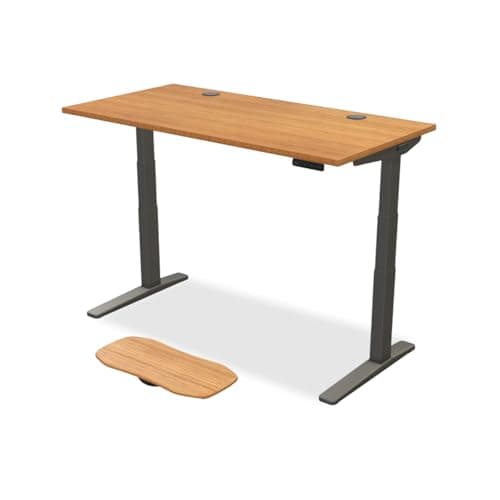 UPLIFT V3 (2-Leg) Publishes a frame range of 47.7 inches, which reads lower than the VIVO until you remember it is the FRAME — add a top and the finished surface edges past it. And it carries 355 lb on a 15-year warranty, which is the desk for tall and heavy. | Tall and heavy, and long ownership | 15 yrWarranty | |
| 3 | 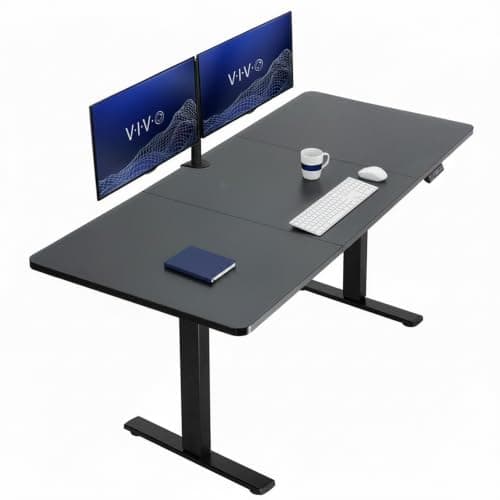 VIVO 1B Series 71″ × 30″ Electric Desk Reaches 48.4 inches of published surface for roughly a third of the UPLIFT's price. The single motor and the three-year warranty are what you trade for that reach. | The tallest budget option | 3 yrWarranty | |
| 4 | 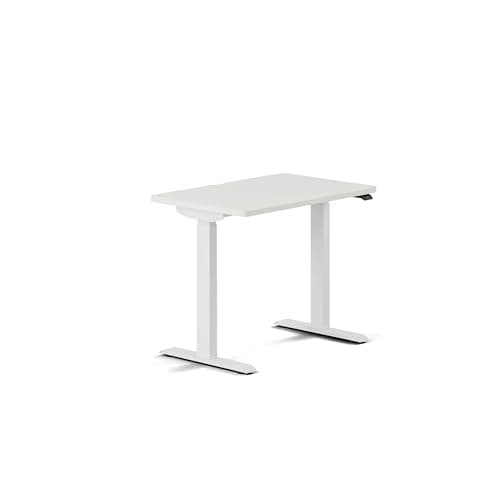 Branch Duo Standing Desk A well-warrantied desk that is simply the shortest here at 47.3 inches. On a page about reaching high, the desk that reaches least is the one to check your own number against first. | The honest short straw for tall users | 10 yrWarranty |
Prices as of October 18, 2026, from Amazon’s API. They change; we show a live number or none at all.
Every standing-desk list, including our own guide to the best standing desk for a home office, ranks the same way for the same good reason: how lowthe desk comes down. A desk that will not descend to a shorter person’s elbows is a desk they fight for as long as they own it, and the floor height is the spec almost nobody prints. If you are short, that page is the one to read.
One of the desks on this page we have since used ourselves: our hands-on review of the UPLIFT V3 covers two weeks of daily use on a 72″ top, with our own photographs. The ranking here is unchanged.
This page is for the other end of the tape measure. For a tall user the floor is irrelevant — every desk here comes down further than you will ever need. The number that runs out for you is the ceiling: the top of the range, the highest the surface will rise before it stops and your wrists start bending up to reach the keys. So that is what we ranked on. Same four desks, sorted by the opposite spec, and the result is a genuinely different order — the desk that wins the main list for going lowest finishes second here.
The uncomfortable finding, before anything else: the spread at the top is small. Across these four the maximum surface height runs from 47.3″ to 50.5″ — barely three inches, on desks that advertise their range as though the sky were the limit. For a lot of tall buyers that narrow band is the whole story, because their standing elbow height sits right inside it and the choice comes down to which desk clears their number with a little room to spare.
The number that decides it is your elbows, not your height
Before you compare a single desk, you need one measurement, and it is not your height. It is your standing elbow height: stand the way you work, in the shoes you wear, let your upper arms hang and bend your elbows to a right angle so your forearms are level, and measure floor to elbow. That is where the top of the desk wants to be. OSHA writes the rule and it is the same sentence sitting or standing — “elbows should be about the same height as the keyboard” — applied on your feet. We walk through the measurement in detail in how high should a standing desk be; do it before you read the rankings, because it converts this whole page from a list into a filter.
Here is why tall users specifically hit the ceiling. ANSI/HFES 100 — an ANSI-accredited national standard — sets the mandated sit/stand adjustment range at 56 to 118 cm, which is roughly 22 to 46″ by our conversion. That 118 cm top exists to cover the tallest people who might buy a desk, and it is the number the engineering is built around. But it is a mandated minimum ceiling, not a promise of headroom — and the standing elbow height of the very tallest users sits at or above it before you add the inch that shoes and a mat put under you. For an average-height person, every desk here has inches of ceiling they will never use. For you, that same ceiling is the first spec to run out, which is exactly why it is worth ranking on.
What we did instead of testing
We have not stood at any of these desks. We do not have a lab, we have not measured a deflection or a decibel, and we are not going to pretend otherwise. What we did was read each manufacturer’s own spec sheet, product page and warranty policy, pull the maximum height, the weight capacity and the warranty, and cite every one so you can check us. Where a manufacturer does not publish a number, we say so rather than borrow one from a retailer. Our methodology pagesets out what that does and does not buy you — and it does not buy you the feel of the thing at full extension, which for a tall desk at maximum height is precisely where wobble lives. For that half, owner reviews are more use than we are.
Frame height is not finished height — the UPLIFT asterisk
The single most misleading comparison on this page is UPLIFT against VIVO, and it is worth defusing before you look at the table. UPLIFT publishes the framerange — 21.6 to 47.7″ — the bare legs with no top. Vari, VIVO and Branch publish the finished surfaceheight, top included. Put a desktop on the UPLIFT frame and the surface your hands actually meet sits about an inch higher than 47.7″, which quietly pushes it past the VIVO’s 48.4″. Read the raw spec figures and you would rank the VIVO higher; compare like with like and the UPLIFT finishes above it. We rank by the finished reality and show both numbers so the discrepancy is visible rather than hidden. What we will not do is print an invented finished figure for the UPLIFT — they do not publish one, so we describe the mechanism and let you add the inch yourself.
The desk that reaches highest carries the least
The cleanest way to get this page wrong is to read the top line — Vari, 50.5″ — and stop there. Reach is only half of what a tall setup asks of a desk, because tall setups tend to be heavy ones: a wider top, a second monitor held further back at a taller viewing distance, a heavier arm to hold them there. And the desk that reaches highest, the Vari, carries the least of the four at 200 lb. The UPLIFT finishes a touch lower and carries 355 — 155 lb more — on the longest warranty here.
So the honest instruction is a two-step one. First, strike out every desk whose top does not clear your measured standing elbow height — that is the fit test, and it is non-negotiable, because no chair or riser fixes a surface that will not rise far enough. Then, among the desks that survive, pick on load and longevity rather than on the last half-inch of reach. For a tall, light setup that is the Vari; for a tall, heavy one it is the UPLIFT; and the difference between them is not which is “better” but which spec binds first for you.
The screen has to rise even further for you
This is the part that catches almost every new standing-desk owner, and it catches tall ones hardest. When you raise the surface to your standing elbow height, the keyboard lands where it should. But a monitor sitting on that same surface rises by only the same few inches — while your eyes rose by however much taller you are standing than sitting, which for a tall person is a great deal. The taller you are, the further your eyes travel and the further below them the screen ends up. OSHA’s guidance is that “the top of the monitor should be at or slightly below eye level,” at a viewing distance “between 20 and 40 inches”— and a monitor left flat on the desktop at standing height misses that low, leaving you looking down and tipping your head forward to compensate.
Which means a tall standing setup is never just the desk. The surface sets your hands; the screen has to be lifted independentlyso it can travel further than the desktop does — on a monitor arm, a tall riser, or a laptop stand with a separate keyboard beneath it. The monitor height guide works out exactly where the screen should land, and it is a bigger lift for you than for anyone else. Budget for the arm at the same time as the desk; for a tall user it is not an accessory, it is the other half of the setup.
If even the tallest here falls short
Some readers will measure their standing elbow height and find it sits above 50.5″ — the most reach we can verify on Amazon. That is a real outcome, not a rounding error, and it is worth saying plainly rather than pretending one of these four will stretch to fit. If that is you, the desk stops being the whole answer. A slimmer desktop on a framegains you almost nothing; a taller one costs you height. The real levers are a made-to-order or commercial frame bought direct from a manufacturer whose specs you can read for that exact configuration — and the same independent screen lift, which does not care how high the desk got. We would rather point you there honestly than rank a desk we cannot verify just to have a taller number at the top of the page. There is more on gaining height under a surface in how to make a desk taller.
How to read the four
Start with your standing elbow height, add a little for shoes and a mat, and use it as a cutoff. If your number is near 47″, the Branch is already marginal and the VIVO and Vari are the safe reach. If it is up around 49–50″, the Vari is effectively the only one of the four that clears it with room, and you are choosing it on reach with the capacity caveat in mind. Everywhere in between, the decision moves off height and onto the same things the main list weighs: how much the desk carries, and how long it is warranted to keep carrying it. Get the fit right first; the desk that fits and lasts is a better buy than the desk that reaches an inch higher and gives up on you at year four.
The picks, in detail
1. The highest verified surface
Vari Classic Electric Standing Desk 60x30
The tallest published surface height we can verify on Amazon — 50.5 inches — and a lifetime warranty. The catch a tall buyer has to weigh: it also has the lowest weight capacity here.
- Max height
- 50.5"
- Capacity
- 200 lb
- Warranty
- Lifetime
For a tall user the deciding number is the one at the top of the range, and 50.5″ is the highest we can put a source under. Just as important as the figure is what Vari measures: the desktop surface, not the bare frame. That matters here more than anywhere, because it means the 50.5″ is the height your hands actually meet — no desktop thickness to add on afterwards.
The honest trade is the capacity. 200 lb is the lowest number on this page, and tall setups tend to be heavy setups — a wider desk, a second monitor, a heavier arm to hold them out at a taller viewing distance. If that is you, read the UPLIFT entry before you buy this one. The desk that reaches highest is not automatically the desk that carries most, and on this page those are two different desks.
Good
- Highest published surface height on this page at 50.5" — Vari measures the desktop, not the bare frame, so the number is the one you actually get
- Lifetime warranty covering motors and electrical components, named for this exact model on Vari's per-model list rather than as brand-wide puffery
- The one desk here whose top end clears a genuinely tall standing elbow height with margin for shoes and a mat
- UL962 listed; GREENGUARD and GREENGUARD Gold certified
Not so good
- 200 lb capacity is the lowest of the four — a real ceiling if you are tall and loading two big monitors, an arm and a tower
- Vari does not publish motor count, transit speed or noise anywhere on its own pages
- Open-box units of the same desk carry only a 90-day warranty — easy to miss on the same product page
Don’t buy it if: you are tall and heavy-loading the desk. If your standing elbow height needs the full 50.5" and you are also mounting dual ultrawides on a heavy arm, you are pushing a 200 lb ceiling that the UPLIFT below clears by 155 lb. Reach and capacity pull in opposite directions here, and only you know which one binds first.
Price as of October 18, 2026. #ad — we earn a commission.
Where these numbers came from
2. Tall and heavy, and long ownership
UPLIFT V3 (2-Leg)
Publishes a frame range of 47.7 inches, which reads lower than the VIVO until you remember it is the FRAME — add a top and the finished surface edges past it. And it carries 355 lb on a 15-year warranty, which is the desk for tall and heavy.
- Max height
- 47.7" frame
- Capacity
- 355 lb
- Warranty
- 15 yr
The trap on this desk is the number, and it is worth spelling out because it is exactly the kind of thing that sinks a tall buyer. UPLIFT’s published 21.6–47.7″ is the framerange. Put a desktop on it and the surface your hands meet sits roughly an inch higher, which nudges the finished height above the VIVO’s 48.4″ even though the printed frame number looks lower. Compare finished-to-finished and this desk out-reaches the VIVO; compare the raw spec figures and you would conclude the opposite. We are not going to print a made-up finished number to tidy that up — UPLIFT does not publish one, so we tell you the mechanism instead.
What actually earns it second place is the pairing of that near-top reach with 355 lb and fifteen years. Tall desks are usually heavy desks, and this is the one on the page built for both at once. If you are tall and your desk carries real weight, this is the pick, and the two inches you give up to the Vari buy you 155 lb and five extra years of cover.
Good
- 355 lb capacity, the highest here by 80 lb — the number that matters if you are tall and running two large monitors, an arm and a tower
- 15-year warranty, extendable to 25 at purchase — the longest fixed term on the page
- The 47.7" is the FRAME height; add a desktop and the finished surface sits about an inch higher, which puts it above the VIVO in practice
- UPLIFT publishes a real spec sheet — 2"/sec travel, <48 dB — and meets ANSI/BIFMA X5.5-2021
Not so good
- UPLIFT publishes the FRAME range only, so the finished surface height is one you have to estimate rather than read — we will not invent it for them
- Even with a top on, the finished height lands a touch under the Vari's 50.5" — if you need every inch, this is not the tallest here
- The most expensive desk on the page
Don’t buy it if: you are tall, light-loading the desk, and want the maximum possible surface height. You would be paying the top price here for the best build on the page and still finishing below the Vari's reach. If reach is the only thing that binds and you are not loading it heavily, the Vari costs less and goes higher.
Price as of October 18, 2026. #ad — we earn a commission.
Where these numbers came from
- UPLIFT V3 2-Leg Standing Desk Frame specification sheet (PDF, FV3-200C) — source of the 21.6–47.7" FRAME range and 355 lb capacity — read 2026-07-16
- UPLIFT desk frame comparison chart (PDF) — V3 2-Leg column — read 2026-07-16
- UPLIFT Desk warranty — 15 years, extendable to 25 at purchase — read 2026-07-16
3. The tallest budget option
VIVO 1B Series 71″ × 30″ Electric Desk
Reaches 48.4 inches of published surface for roughly a third of the UPLIFT's price. The single motor and the three-year warranty are what you trade for that reach.
- Max height
- 48.4"
- Capacity
- 220 lb
- Warranty
- 3 yr
This is the honest budget entry, and for a tall buyer it is a better one than usual: the thing budget desks normally skimp on — the top of the range — is exactly where this one holds up, at a published 48.4″ of real surface height. The high 29.2″ floor that would disqualify it for a shorter user simply does not matter to you.
The compromise sits at the other spec. One motor and three years, at a third of the UPLIFT’s price, is a coherent bargain rather than a hidden flaw — but it is a bargain a heavy tall setup leans on harder than a light one. Buy it for the reach and the price with your eyes open about the warranty, not because you expected a fifteen-year desk for a three-year desk’s money.
Good
- A published 48.4" SURFACE height — second only to the Vari, and reached at by far the lowest price on the page
- VIVO publishes lift speed (25 mm/s) and noise (<50 dB) — more than Branch or Vari put on their own pages
- A genuinely large 71 × 30" top, which matters more for tall users who tend to sit further back and reach further
Not so good
- Single motor, which is the usual reason a desk is this cheap and the usual reason a tall, heavier load feels the lift working
- 3-year warranty against 10, 15 and lifetime elsewhere on this page
- The 29.2" floor is the highest here — irrelevant if you are tall, but it means this desk cannot double for a shorter person in the house
Don’t buy it if: you intend to keep the desk a decade. The reach is real and the price is genuinely low, but the three-year warranty against a single motor is the gamble you are taking. For a tall user who loads the desk hard, that motor is working against more weight at more extension than a shorter setup asks of it.
Price as of October 18, 2026. #ad — we earn a commission.
Where these numbers came from
4. The honest short straw for tall users
Branch Duo Standing Desk
A well-warrantied desk that is simply the shortest here at 47.3 inches. On a page about reaching high, the desk that reaches least is the one to check your own number against first.
- Max height
- 47.3"
- Capacity
- 275 lb
- Warranty
- 10 yr
The Duo is a genuinely good desk and it is ranked last here for one reason only: on a list sorted by how high a desk reaches, 47.3″ is the bottom. For an average-height buyer that ceiling is slack they will never touch. For the tall user this page is written for, it is the number most likely to run out — the point where the surface stops rising before your elbows do, and your wrists start bending up to meet the keys.
Everything else about it argues for it: 275 lb, a clean ten-year warranty, collision detection. If you are reading this page and you turn out not to be all that tall after measuring, the Duo may well be the best desk of the four for you. But measure first. That is the whole job of this entry.
Good
- Flat 10-year warranty on the Duo, with no purchase-date asterisk
- 275 lb capacity, comfortably above the Vari and the VIVO
- Collision detection and a two-preset OLED paddle
Not so good
- Lowest top end on the page at 47.3" — the desk most likely to leave a tall user standing with cocked-up wrists at the top of its travel
- Branch does not publish motor count, stage count, transit speed, noise, or any BIFMA statement on its own pages
- The 1.3 in/sec and <50 dB figures quoted elsewhere trace to retailers, not to Branch, so we have left them out
Don’t buy it if: your standing elbow height is anywhere near 47". This is a good desk that is on this page mainly to be measured against: if 47.3" does not clear your elbows with a little room for shoes and a mat, it is the wrong desk for you no matter how good the warranty is, and no amount of chair adjustment fixes a surface that will not rise far enough.
Price as of October 18, 2026. #ad — we earn a commission.
Where these numbers came from
- Branch Duo Standing Desk product page — source of the 28–47.3" surface range and 275 lb capacity — read 2026-07-16
- Branch warranty — 10 years on the Duo — read 2026-07-16
Common questions
How high does a standing desk need to be if I'm tall?
High enough to reach your standing elbow height— the height of your elbows when you stand relaxed, forearms level — which is a number you measure on your own body, not a fraction of your height and not the figure on the box. That is OSHA’s keyboard rule: “elbows should be about the same height as the keyboard.” We will not print a single “tall people need X inches” figure, because there isn’t one — there is yours. Measure it the way the how high should a standing desk be guide describes, then buy a desk whose published top clears it with a little room for shoes and a mat.
Is 50.5 inches tall enough for someone 6'6"?
It is borderline, and this is the honest finding of the page. ANSI/HFES 100 sets the mandatedsit/stand adjustment range only as high as 118 cm — about 46″ by our conversion — and the very tallest users’ standing elbows sit at or above that ceiling before you add the inch or so that shoes and a standing matput under you. The Vari’s 50.5″ is the most reach we can verify on Amazon, and for many tall users it clears comfortably. If your measured standing elbow height is close to or above it, the desk alone will not get you there — you are into a taller keyboard tray, or a made-for-tall frame bought direct, and the desk becomes only part of the fix.
Why does the tallest desk here have the lowest weight capacity?
Because reach and load are separate engineering problems, and no desk on this page is best at both. The Vari goes highest (50.5″) but carries least (200 lb); the UPLIFT finishes a touch lower but carries most (355 lb) on the longest fixed warranty. Tall setups are often heavy setups, so if you are tall and loading the desk with two large monitors, a heavy arm and a tower, the buyer-first pick is the UPLIFT even though it ranks second on pure height. Height decides which desks can fit you; capacity decides which of those will survive your load.
Isn't the UPLIFT's 47.7" shorter than the VIVO's 48.4"?
Only on paper, and this is the one place the raw numbers mislead. UPLIFT publishes the framerange (21.6–47.7″), while Vari, VIVO and Branch publish the finished surface height. Put a desktop on the UPLIFT frame and the surface sits about an inch higher, which edges it past the VIVO’s 48.4″ in practice. We rank the two by that finished reality but show you both figures so you can see why the spec sheets look like they disagree. UPLIFT does not publish a finished number, so we describe the mechanism rather than invent the inch.
Do I still need a monitor arm if the desk goes high enough?
More than an average-height user does, not less. Raising the surface to your standing elbow height lifts the keyboard, but a monitor sitting on that surface rises by only the same few inches — while your eyes rose much further, because you are tall and now standing. The screen ends up well below OSHA’s “at or slightly below eye level.” The taller you are, the bigger that gap, so lifting the screen independently on an arm matters most for exactly the people this page is for. The monitor height guide has the geometry, and the best monitor arms are ranked on the reach and weight range that decide it.
Why isn't FlexiSpot or Autonomous on this list?
For two different reasons, both about verification. FlexiSpot’s site blocks automated access and the height figures circulating elsewhere contradict each other, so we cannot read a spec at its source — the same reason it is absent from the main standing desks list. Autonomous’s taller models we could only confirm through review sites, not the manufacturer’s own published specs, and this site ranks on numbers we can cite where they were printed. A desk whose top-end we cannot verify does not get ranked on a page whose entire point is the top end.
Sources
Every figure on this page comes from one of these. If a manufacturer doesn’t publish a number, we print “—” rather than estimate it.
- Vari Classic Electric Standing Desk 60x30 (FD-ESD6030) product page — source of the 25–50.5" surface height range and 200 lb capacity — read 2026-08-08
- Vari warranty policy — the per-model list naming the Electric Standing Desk under lifetime coverage — read 2026-08-08
- UPLIFT V3 2-Leg Standing Desk Frame specification sheet (PDF, FV3-200C) — source of the 21.6–47.7" FRAME range and 355 lb capacity — read 2026-07-16
- UPLIFT desk frame comparison chart (PDF) — V3 2-Leg column — read 2026-07-16
- UPLIFT Desk warranty — 15 years, extendable to 25 at purchase — read 2026-07-16
- VIVO 1B-series electric desk product page — source of the 29.2–48.4" surface range, 220 lb capacity, single-motor 25 mm/s lift and 3-year warranty — read 2026-08-08
- Branch Duo Standing Desk product page — source of the 28–47.3" surface range and 275 lb capacity — read 2026-07-16
- Branch warranty — 10 years on the Duo — read 2026-07-16
- OSHA Computer Workstations eTool — Keyboards and Input Devices ("Elbows should be about the same height as the keyboard and hang comfortably to the side of the body") — read 2026-07-28
- OSHA Computer Workstations eTool — Monitors ("the top of the monitor should be at or slightly below eye level"; "preferred viewing distance is between 20 and 40 inches") — read 2026-07-28
- ANSI/HFES 100-2007 (full text) — the sit/stand input-surface adjustment range of 56–118 cm. A mandated RANGE, not a target height; 118 cm ≈ 46" by our conversion. — read 2026-07-28
Read next
UPLIFT vs Vari standing desk
The two desks at the top of this list, head to head — including the 50.5" against 47.7" top end that decides it for taller buyers.
The best standing desks
The general list, ranked on the floor height for shorter buyers. This page inverts it for the top end — start there if you're average height.
How high should a standing desk be?
Measure your own standing elbow height before you shortlist — the number that decides whether any of these clears you.
The best office chairs for tall people
The seat that goes under the desk you just raised — ranked on published seat height for larger bodies.
Monitor height guide
Your screen has to rise further than the desk does when you're tall and standing. Where it should land, and why the desktop can't get it there.
The best monitor arms
Lift the screen independently of the surface — ranked on the weight range and reach that decide whether an arm holds your monitor at a tall standing eyeline.
How to make a desk taller
If even the tallest desk here falls an inch short: risers, feet and leg swaps to reach your real standing elbow height.
The best standing desk frames
Bring your own top: a thicker desktop on a frame adds finished height, and the bare frames are ranked on the same three numbers.
Desk height calculator
The other number a sit-stand desk has to hit: your seated height, taken in the chair. Save both as presets.