The best wrist rests for keyboard and mouse
OSHA publishes two rules for a wrist rest: at least 1.5 inches deep, and matched to the height of your keyboard's front edge. We ranked five on whether their makers publish enough to check either one — and found the ergonomics brand publishes no dimensions while the gaming brands do.
By Stephen V.Last reviewed
Quick picks
Ranked, with the manufacturer’s own longevity figure next to each one. Tap a row to jump to the full write-up.
| # | Product | Best for | Longevity | Price |
|---|---|---|---|---|
| 1 | 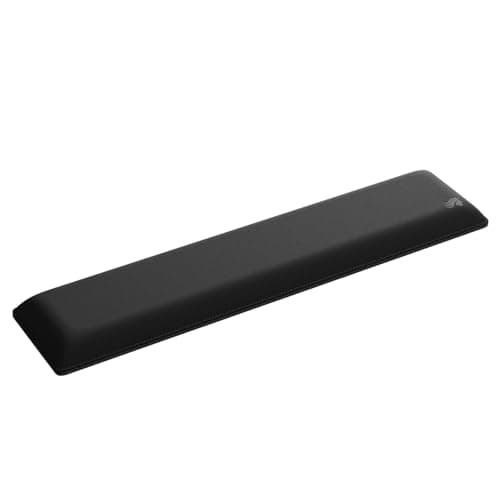 Glorious Cloth Ergonomic Keyboard Wrist Rest (Full Size) The only wrist rest on this page whose maker publishes all three numbers a buyer actually needs — 4 inches deep, 25 mm tall, one-year warranty. It ranks first because you can check it against OSHA's guidance before you spend anything, not because 25 mm is the right height for every keyboard. It is the tallest rest here. | A tall mechanical keyboard | 1 yrWarranty | |
| 2 | 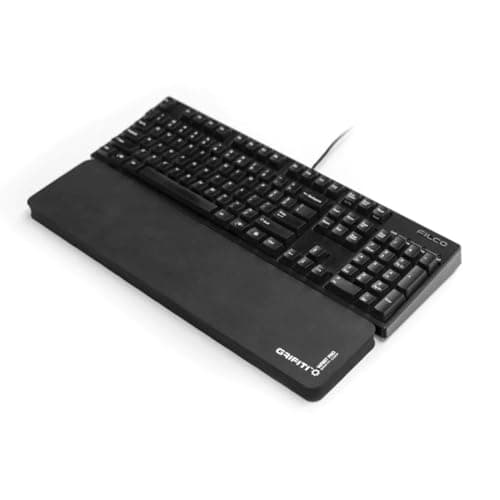 Grifiti Fat Wrist Pad 17 (17″ × 4″ × 0.75″) The low-profile answer, and the cheapest rest on this page. Grifiti publishes both fit numbers — 4 inches deep and 0.75 inches tall — which makes it the one product here you can match to a slim keyboard on paper. What it does not publish is any warranty at all. | Slim, low-profile keyboards | —Warranty | |
| 3 | 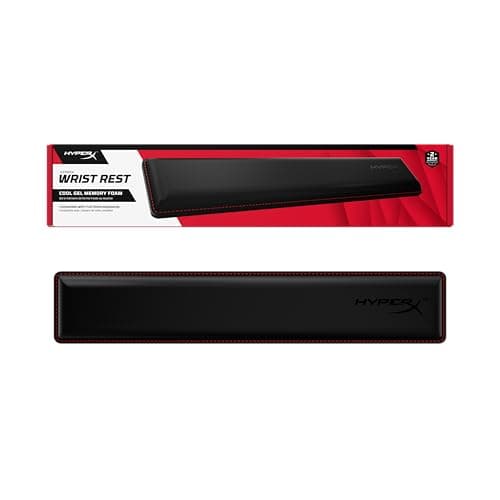 HyperX Wrist Rest – Keyboard – Full Size (4P5M9AA) The longest published warranty on the page attached to a real published depth — 88 mm, well over OSHA's minimum — and a gel-infused memory foam fill. The gap is the one number OSHA actually tells you to match: HyperX publishes no height. | The longest published warranty | 2 yrWarranty | |
| 4 | 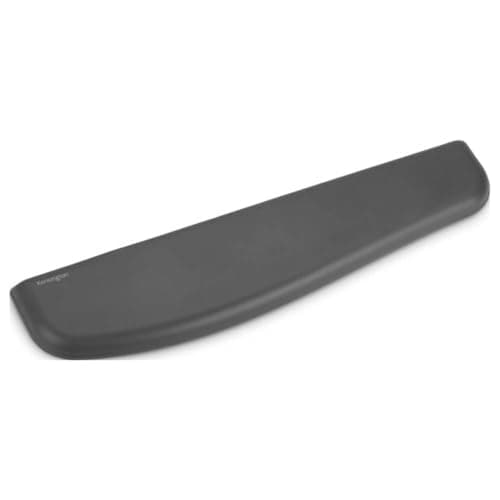 Kensington ErgoSoft Wrist Rest (K52799WW) The ergonomics company answers the fit question backwards from everyone else: it publishes no dimensions of its own, and instead publishes the keyboard front height the rest is built to match — 10 to 20 mm. If you would rather check your keyboard than check the pad, this is the only product here that lets you. | A standard-height keyboard | 2 yrWarranty | |
| 5 | 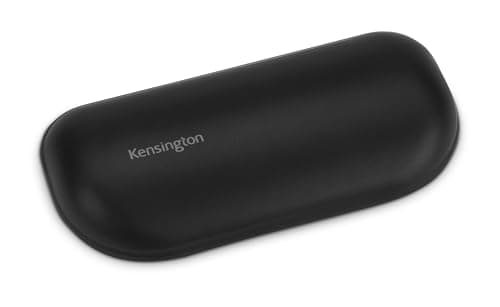 Kensington ErgoSoft Wrist Rest for Standard Mouse (K52802WW) The mouse hand gets forgotten, and it is the hand making the small repeated movements. This is the same gel cushion, the same two-year warranty and the same MIL-STD cleaning claim as the keyboard model, in the shape that sits behind a mouse — and, like the keyboard model, with no dimensions published at all. | The mouse hand | 2 yrWarranty |
Prices as of October 18, 2026, from Amazon’s API. They change; we show a live number or none at all.
A wrist rest is a $20 accessory with a $200 opinion attached to it. Search the category and you will find hundreds of lists ranking softness, which nobody can measure on your behalf, and almost none reporting the two figures that decide whether the thing helps or quietly holds your hands at an angle for three years.
Those two figures are published, and the body that publishes them is OSHA. So that is what we ranked on. We have not typed on any of these. Everything below is what each manufacturer prints about its own product, read at the manufacturer’s own site, with a dash wherever a company stays quiet.
The short answer
Measure the front edge of your keyboard first — the height from the desk up to the bottom row of keys. Then read across.
A slim or low-profile keyboard:the Grifiti Fat Wrist Pad, at a published 0.75″. It is also the cheapest rest here, which is a pleasant accident rather than a compromise.
A tall mechanical keyboard: the Glorious cloth rest, at a published 25 mm. It is the only product on this page whose maker publishes depth, height and warranty together.
You care most about how long it is covered:the HyperX, with a published two-year term and 88 mm of published depth — but no published height, so you are matching by eye.
You would rather match the keyboard than the pad: the Kensington ErgoSoft, the only one that states the keyboard front-height band it was designed for.
Nothing at all: a real answer, and for a lot of people the right one. If your wrists are straight while you type, a rest has nothing to fix. Do you need a wrist rest makes that case properly.
What we ranked on, and why
Three criteria, in this order, and every one of them is a number a manufacturer either prints or does not.
1. Published depth. OSHA states that a wrist or palm support “should be at least 1.5 inches (3.8 cm) deep”. It is the only hard number anybody publishes for this product category, and it exists because of a second OSHA instruction: when resting, “the pad should contact the heel or palm of your hand, not your wrist”. A pad too shallow to reach the heel of the hand presses on the wrist instead. If a maker will not print a depth, you cannot run that check before you buy.
2. Published height. OSHA again: “Match the wrist support to the width, height, and slope of the front edge of the keyboard.” This is the criterion that separates a rest that works from one that makes things worse, and it is entirely relative — there is no correct height, only a height that matches your keyboard. A 25 mm pad in front of a chiclet keyboard is a ramp. A 0.75″ pad in front of a tall mechanical board leaves a step down.
3. Published warranty.The third slot on every product on this site is the longevity number, because the site’s question is what still works in three years rather than what feels good in the shop. For a foam or gel pad the realistic failure is compression — it flattens, and the height you matched so carefully is no longer the height you have.
Six of these fifteen numbers do not exist
Five products, three figures each, and nine of the fifteen are published. The other six are blank, and where they fall is the most interesting thing we found.
Glorious — a gaming brand — publishes all three. HyperX publishes depth and warranty but not height. Grifiti publishes depth and height but no warranty at all. And Kensington, the only company here that sells ergonomics as its actual business, publishes no dimensions for any product in the line: not for the keyboard rest, not for the mouse rest. Four of the six blanks are Kensington’s.
That is the reverse of what you would expect, and it is worth being precise about what it does and does not mean. It does not mean Kensington’s rests are worse. Kensington publishes things nobody else here does — a keyboard front-height range, a two-year warranty, a MIL-STD-810H cleaning result. It means that if you want to check a product against the one standard that names a number, the gaming brands let you and the ergonomics brand does not.
Where the numbers came from, and where we stopped
Every figure on this page was read on the manufacturer’s own site. None came from an Amazon listing, a spec aggregator or a review video, and two well-known brands were dropped from this roundup for exactly that reason.
3M and Fellowes are not here, and not because of anything about the products. Both render their US product pages client-side or refuse automated access, so we could not read a single figure at the source. Their specs are easy to find on retailer sites. Copying a spec off a retailer and presenting it as the maker’s is how a wrong number gets laundered into a comparison, and we have watched retailer listings contradict manufacturers often enough to stop doing it.
The same rule cost the Kensington entries two slots each. Dimensions for the ErgoSoft line circulate widely — the Amazon title for the mouse model carries them — and we still print dashes, because Kensington does not publish them. That inconsistency would be invisible to you if we did not say so, which is precisely why we say so.
What a wrist rest cannot fix
Two things, and both are more common than a badly chosen pad.
A keyboard that is too high. If your desk forces your elbows below your hands, the wrist is bent before any pad is involved, and padding the front edge only makes holding that angle more comfortable. The fix is lowering the keyboard, which usually means a keyboard trayor a desk at the right height — our desk height calculator gives you the number to aim at from your own measurements.
A mouse in the wrong place. A mouse further away or higher than the keyboard pulls the shoulder forward and turns the wrist, and no pad behind it changes that geometry. Wrist and keyboard position is the free version of this entire page, and it should be done first.
And if the wrist angle itself is what bothers you, a rest is the smallest of the available answers. A keyboard that changes the angle is a bigger one, at ten times the price — we set the two against each other on wrist rest vs ergonomic keyboard, and we ranked the keyboards themselves on published split angle, tenting and warranty.
What we can’t tell you
Which of these feels best. We have not typed on any of them, and softness is the one property in this category that is pure preference — somebody who likes gel will find memory foam dead, and both opinions are correct.
We also cannot tell you whether any of these will reduce pain, prevent an injury or help a condition you already have. That is a clinical question, this is a website with buy buttons on it, and the honest boundary is that we report geometry and published materials and stop. If your wrists hurt, a clinician is the right next step, not a $20 pad. Our methodology sets out exactly what publishing manufacturer figures is worth and where it runs out.
The picks, in detail
1. A tall mechanical keyboard
Glorious Cloth Ergonomic Keyboard Wrist Rest (Full Size)
The only wrist rest on this page whose maker publishes all three numbers a buyer actually needs — 4 inches deep, 25 mm tall, one-year warranty. It ranks first because you can check it against OSHA's guidance before you spend anything, not because 25 mm is the right height for every keyboard. It is the tallest rest here.
- Depth
- 4″ (102 mm)
- Height
- 25 mm
- Warranty
- 1 yr
Glorious is a gaming brand and this is an ergonomics page, so it is worth saying plainly why it is first: it is the only maker here that publishes the depth, the height and a warranty term. Everyone else leaves at least one of those blank.
The published figures for the full-size version are 4″ × 18″ (102 mm × 455 mm) with a 25 mm thickness, a plush cloth surface over a foam core, a non-slip rubber base and a one-year warranty. The depth is the one that can be checked against a published standard: OSHA says a wrist or palm support “should be at least 1.5 inches (3.8 cm) deep”, and 4″ is comfortably over that line. Glorious also publishes 14″ and 13″ lengths for tenkeyless and 65/75% boards, which is the other half of OSHA’s instruction — match the rest to the width of the keyboard, not to the width of the desk.
The honest problem is the height. 25 mm is roughly an inch, and that is the right height only if the front edge of your keyboard is about an inch off the desk — a mechanical board with a tall case, in other words. Put it in front of a slim keyboard and it becomes a ramp that pushes the heel of your hand up above the keys. Measure the front edge of your own keyboard before you order this one; if the number is small, the pick below is the one you want.
Good
- Publishes depth, height and a warranty term — the only product on this page that fills every slot, which makes it the only one you can check against OSHA's 1.5 in minimum without buying it first
- 4 in (102 mm) of depth is the deepest published figure here, and OSHA's floor is 1.5 in — this clears it by a wide margin
- The published 25 mm height is what makes it usable under a tall mechanical board, where a thin pad leaves the heel of the hand dropping down to the desk
- Three published lengths — 18 in full size, 14 in tenkeyless, 13 in for 65/75% boards — so the rest can be matched to the keyboard's width, which is the first thing OSHA tells you to match
- Non-slip rubber base and stitched cloth over a foam core, both stated by Glorious rather than inferred from a listing
Not so good
- 25 mm is tall. Under a slim or low-profile keyboard it lifts the heel of the hand ABOVE the keys, which bends the wrist the wrong way — the exact fault a wrist rest is bought to avoid
- One year is the shortest published warranty on this page; the HyperX and both Kensington rests publish two
- It is the most expensive rest here, and the extra money buys published numbers and a cloth finish rather than a longer promise
- Cloth over foam cannot be wiped down the way a gel or silicone surface can, and Glorious publishes no cleaning or solvent-resistance claim at all
- Glorious publishes no foam density, no firmness rating and no compression figure, so nothing tells you how the 25 mm behaves after a year of load
Don’t buy it if: your keyboard is a slim, low-profile or laptop-style board. At 25 mm this rest is taller than the front edge of most chiclet keyboards, and a rest taller than the keyboard is worse than no rest at all. Buy the Grifiti instead.
Price as of October 18, 2026. #ad — we earn a commission.
Where these numbers came from
- Glorious Cloth Ergonomic Keyboard Wrist Rest product page — “100% (Full Size): 4" x 18" (102 mm x 455 mm)”; thickness “25mm”; “Plush Padded Cloth”; “breathable cloth surface”; “Non-Slip Rubber Base”; “One Year Warranty”. Also lists “Tenkeyless (TKL): 4" x 14" (102 mm x 356 mm)” and “65% / 75% (Compact): 4" x 13" (102 mm x 331 mm)” — read 2026-08-24
- OSHA — Computer Workstations eTool, Wrist/Palm Support: “The support should be at least 1.5 inches (3.8 cm) deep”; “Match the wrist support to the width, height, and slope of the front edge of the keyboard (keeping in mind that the goal is to keep wrist postures as straight as possible)”; “Your hands should move freely and be elevated above the wrist/palm rest while typing”; “When resting, the pad should contact the heel or palm of your hand, not your wrist”; “Provide wrist/palm supports that are fairly soft and rounded to minimize pressure on the wrist” — read 2026-08-24
2. Slim, low-profile keyboards
Grifiti Fat Wrist Pad 17 (17″ × 4″ × 0.75″)
The low-profile answer, and the cheapest rest on this page. Grifiti publishes both fit numbers — 4 inches deep and 0.75 inches tall — which makes it the one product here you can match to a slim keyboard on paper. What it does not publish is any warranty at all.
- Depth
- 4″
- Height
- 0.75″
- Warranty
- —
This is second rather than first for one reason only: Grifiti prints no warranty. On every other axis it is the most checkable product on the page, and it is the cheapest.
Grifiti publishes 17″ × 4″ × 0.75″on its own product page, along with a “soft, squishy neoprene center”, a non-skid base and washable nylon surface options. Two of those numbers are the two OSHA cares about: the 4″ depth clears the “at least 1.5 inches”floor, and the 0.75″ height is the figure you hold against the front edge of your keyboard.
Why we rank a published height above a published warranty here: the warranty tells you what happens if the product fails, and the height tells you whether the product was ever going to work. A rest at the wrong height does not fail — it works exactly as designed, holding your hand at an angle, for years. That is the outcome a warranty never covers, and it is why Grifiti sits ahead of the two-year HyperX below.
The dash in the third slot is not a gap in our research. We read Grifiti’s own site and there is no term published for this product. Where a maker is silent we print a dash, and you can price that silence yourself — this is the least expensive rest here.
Good
- Publishes both fit numbers — 4″ deep and 0.75″ (19 mm) tall — so you can compare it to the front edge of your own keyboard before buying, which is exactly what OSHA tells you to do
- 0.75″ is the lowest published height here, and low is the safer error on a slim or chiclet keyboard: a rest slightly below the keys still supports the palm, a rest above them bends the wrist up
- 4″ of depth matches the deepest figure on this page and clears OSHA's 1.5 in floor by more than double
- Neoprene center and a non-skid base, both stated by Grifiti, and the nylon-surface versions are described as washable
- Cheapest of the five, and the lower price is not buying you less published information — it is buying you less warranty
Not so good
- Grifiti publishes no warranty term for this product anywhere we could find, so the longevity slot is a dash — on a site that ranks the third number on how long a maker will stand behind the thing, that is a real mark against it
- No published foam density, no compression figure and no rated life, so nothing on paper says how 0.75″ of neoprene holds up after a year
- The same product line sells a 2.75″-deep version at the same length. It still clears OSHA's 1.5 in floor, but it is a noticeably shallower pad — check which one you are ordering
- No cleaning, antimicrobial or solvent-resistance claim of any kind, where both Kensington rests publish a MIL-STD test reference
- Plain, utilitarian construction, and Grifiti publishes no stitching or edge-durability claim — we have not handled one and cannot tell you how the seams last
Don’t buy it if: you want a warranty behind the purchase, or your keyboard is a tall mechanical board. At 0.75″ this sits well below the front edge of a high-profile case, which leaves the hand unsupported in exactly the gap the rest was meant to fill.
Price as of October 18, 2026. #ad — we earn a commission.
Where these numbers came from
- Grifiti Fat Wrist Pad 17 product page — “17" x 4" x 0.75"” (a “17" x 2.75" x 0.75"” version is also listed); “soft, squishy neoprene center”; “non-skid base”; washable nylon surface options. No warranty term is published for this product — read 2026-08-24
- OSHA — Computer Workstations eTool, Wrist/Palm Support: “The support should be at least 1.5 inches (3.8 cm) deep”; “Match the wrist support to the width, height, and slope of the front edge of the keyboard (keeping in mind that the goal is to keep wrist postures as straight as possible)”; “Your hands should move freely and be elevated above the wrist/palm rest while typing”; “When resting, the pad should contact the heel or palm of your hand, not your wrist”; “Provide wrist/palm supports that are fairly soft and rounded to minimize pressure on the wrist” — read 2026-08-24
3. The longest published warranty
HyperX Wrist Rest – Keyboard – Full Size (4P5M9AA)
The longest published warranty on the page attached to a real published depth — 88 mm, well over OSHA's minimum — and a gel-infused memory foam fill. The gap is the one number OSHA actually tells you to match: HyperX publishes no height.
- Depth
- 88 mm (3.5″)
- Height
- —
- Warranty
- 2 yr
If the third column is what you shop on — and on this site it usually is — this is the strongest entry here. HyperX publishes a two-year warranty, a 457 mm width and an 88 mm depth, plus a cool gel-infused memory foam fill and a natural-rubber underside.
88 mm is about 3.5″. Against OSHA’s “at least 1.5 inches (3.8 cm) deep”that is a large margin, and depth is the dimension that decides whether the pad supports the heel of the hand or catches the wrist itself — OSHA is explicit that the contact should be “the heel or palm of your hand, not your wrist”.
What is missing is the height, and HyperX’s own support pages for this line now bounce into an HP 404 redirector, so there is no deeper first-party page to read. Retail listings do carry a thickness. We are not going to print it as a specification, because a retailer describing someone else’s product is not the maker speaking, and this page exists to keep those two things apart. If you need the height, the Grifiti and Glorious entries publish theirs.
Good
- Two-year warranty published by HyperX on the product page itself, double the Glorious term and the joint-longest here
- 88 mm (about 3.5″) of published depth, which clears OSHA's 1.5 in minimum by more than double
- 457 mm of published width, so you can check it against a full-size keyboard rather than guessing whether it runs the whole span
- Cool gel-infused memory foam and a textured natural-rubber underside, both stated by HyperX rather than pulled from listing copy
- Sold in full-size, tenkeyless and compact lengths, so the width can be matched to the board you actually own
Not so good
- HyperX publishes no height or thickness for this rest. That is the number OSHA names when it tells you to match the support to the front edge of the keyboard, and its absence is why this is third rather than first
- Retail listings quote a thickness figure; a retailer's number is not the manufacturer's number and we do not print it as a spec
- Memory foam compresses under load, and HyperX publishes no density, firmness or recovery figure — so the two-year term covers a fill whose behavior over that time is not specified anywhere
- No cleaning or solvent-resistance claim, where both Kensington rests publish a MIL-STD test reference
- HyperX's own support specification pages for this product line now redirect into an HP 404 handler, so there is no deeper first-party page left to check the figures against
Don’t buy it if: your keyboard is unusually low or unusually tall and you need to know the rest's height before you commit. HyperX does not publish it, and a wrist rest bought without that number is a coin flip on the one dimension that decides whether it helps.
Price as of October 18, 2026. #ad — we earn a commission.
Where these numbers came from
- HyperX Wrist Rest – Keyboard – Full Size (SKU 4P5M9AA) product page — Compatibility “Full-sized keyboards”; Width “457mm”; Depth “88mm”; Warranty “2 year”; “cool gel memory foam”; “natural rubber underside”. No height or thickness is published on the page — read 2026-08-24
- OSHA — Computer Workstations eTool, Wrist/Palm Support: “The support should be at least 1.5 inches (3.8 cm) deep”; “Match the wrist support to the width, height, and slope of the front edge of the keyboard (keeping in mind that the goal is to keep wrist postures as straight as possible)”; “Your hands should move freely and be elevated above the wrist/palm rest while typing”; “When resting, the pad should contact the heel or palm of your hand, not your wrist”; “Provide wrist/palm supports that are fairly soft and rounded to minimize pressure on the wrist” — read 2026-08-24
4. A standard-height keyboard
Kensington ErgoSoft Wrist Rest (K52799WW)
The ergonomics company answers the fit question backwards from everyone else: it publishes no dimensions of its own, and instead publishes the keyboard front height the rest is built to match — 10 to 20 mm. If you would rather check your keyboard than check the pad, this is the only product here that lets you.
- Depth
- —
- Height
- —
- Warranty
- 2 yr
Kensington is the only dedicated ergonomics brand on this page, and it publishes the fewest numbers about its own product. That sounds like a criticism and is only half of one, because what it publishes instead is the more useful half of OSHA’s instruction.
OSHA says to “match the wrist support to the width, height, and slope of the front edge of the keyboard”. Every other maker here answers that by telling you how tall the pad is and leaving you to measure the keyboard. Kensington answers it by telling you which keyboards the pad was built for: a front height of 10 mm to 20 mm. If your keyboard is in that band, the matching is done. If it is not, Kensington sells different models in the same line and you are looking at the wrong one.
The rest of what it publishes is unusually solid for a desk accessory: gel cushioning, a limited two-year warranty, TAA compliance, and MIL-STD-810H Method 504.3— a real, named test for surviving 24 hours of alcohol and bleach cleaning. That last one is worth more than it sounds on a surface your hands sit on all day.
What you cannot do is check it against the one figure OSHA puts a number on. Kensington publishes no depth, so the 1.5″ minimum is unverifiable until the box is open. That is why it sits below three products that print less pedigree and more measurements.
Good
- The only maker here that publishes the keyboard front-height range its rest is designed for — “Designed for keyboards with a front height of 10mm-20mm” — which is OSHA's matching instruction answered from the other end
- Limited 2-year warranty published on Kensington's own product page, joint-longest on this page
- Gel cushioning rather than plain foam, stated by Kensington rather than inferred from listing copy
- Meets MIL-STD-810H Method 504.3 for resistance to breakdown under alcohol and bleach cleaning for at least 24 hours — a named test reference, which nothing else on this page carries
- TAA compliant, which matters if you are buying through a government or enterprise purchasing channel
Not so good
- Kensington publishes no dimensions at all — no depth, no height, no length — so you cannot check this against OSHA's stated 1.5 in minimum depth without measuring the one that arrives
- Two of its three Spec Line slots are dashes, more than any other keyboard rest here, and that is the maker's silence rather than ours
- The 10–20 mm range is for standard keyboards. On a low-profile or slim board the front edge is usually under 10 mm, and this is then the wrong model in the line
- The dimensions widely quoted for the ErgoSoft line come from retailer listings, not from Kensington, so they carry none of the weight a manufacturer figure would
- More expensive than the HyperX and the Grifiti while publishing fewer of its own numbers than either
Don’t buy it if: your keyboard is already too high for you. A wrist rest does not fix a keyboard sitting above your elbows — that is a desk-height or keyboard-tray problem, and padding the front of it just holds your wrists in the same bent position more comfortably.
Price as of October 18, 2026. #ad — we earn a commission.
Where these numbers came from
- Kensington ErgoSoft Wrist Rest for Standard Keyboards (K52799WW) product page — “Designed for keyboards with a front height of 10mm-20mm”; “gel-cushioned padding”; “Meets MIL-STD-810H Method 504.3 Contamination by Fluids testing for resistance to breakdown when exposed to cleaning and disinfecting solvents such as alcohol and bleach for at least 24 hours”; “Limited 2-year warranty”; TAA Compliant. No dimensions are published on the page — read 2026-08-24
- OSHA — Computer Workstations eTool, Wrist/Palm Support: “The support should be at least 1.5 inches (3.8 cm) deep”; “Match the wrist support to the width, height, and slope of the front edge of the keyboard (keeping in mind that the goal is to keep wrist postures as straight as possible)”; “Your hands should move freely and be elevated above the wrist/palm rest while typing”; “When resting, the pad should contact the heel or palm of your hand, not your wrist”; “Provide wrist/palm supports that are fairly soft and rounded to minimize pressure on the wrist” — read 2026-08-24
5. The mouse hand
Kensington ErgoSoft Wrist Rest for Standard Mouse (K52802WW)
The mouse hand gets forgotten, and it is the hand making the small repeated movements. This is the same gel cushion, the same two-year warranty and the same MIL-STD cleaning claim as the keyboard model, in the shape that sits behind a mouse — and, like the keyboard model, with no dimensions published at all.
- Depth
- —
- Height
- —
- Warranty
- 2 yr
Almost every “best wrist rest” list is a list of keyboard pads. The mouse hand is the one holding a single position and making hundreds of small movements an hour, and it is the one nobody ranks.
Kensington’s mouse model publishes the same things the keyboard model does — gel cushioning, a non-skid rubber backing, the MIL-STD-810H Method 504.3 cleaning claim, TAA compliance and a limited two-year warranty— and, in exactly the same way, no dimensions whatsoever. The figures that appear in the Amazon title and across retailer spec tables are the retailers’, not Kensington’s.
Before you buy it, do the free thing first. A mouse sitting further from you or higher than your keyboard bends the wrist more than any pad can correct, and keyboard and mouse position costs nothing to fix. If the position is already right and the pressure point is the heel of the hand, this is the cheapest thing on this page and it carries the longest promise.
Good
- Covers the hand every other product on this page ignores — OSHA's wrist/palm guidance is written for supports generally, not for keyboards alone
- Limited 2-year warranty published on Kensington's own product page
- Same MIL-STD-810H Method 504.3 solvent-resistance reference as the keyboard model, which is the strongest cleaning claim on this page
- Non-skid rubber backing, stated by Kensington — the usual failure for a small pad is sliding, not wearing out
- Cheapest product on this page by a clear margin, and a complete answer to its own narrow job
Not so good
- Kensington publishes no dimensions for this model either, so two of its three slots are dashes and OSHA's 1.5 in depth minimum cannot be checked before purchase
- The dimensions in the Amazon title and in retailer spec tables are not Kensington's own, and we do not treat them as specifications
- It supports the hand in one position. If you move the mouse across a wide area, a fixed pad behind it is in the wrong place for most of that travel
- Gel under a mousing hand is a matter of preference more than geometry, and preference is exactly what we cannot test for you
- Buying this instead of fixing mouse position is the wrong order — the mouse belongs beside the keyboard at the same height, and no pad substitutes for that
Don’t buy it if: your mouse sits higher or further away than your keyboard. Fix that first — it is free, and it changes the wrist angle far more than any pad does. A rest added to a bad position just makes the bad position comfortable.
Price as of October 18, 2026. #ad — we earn a commission.
Where these numbers came from
- Kensington ErgoSoft Wrist Rest for Standard Mouse (K52802WW) product page — “gel-cushioned padding”; “Non-skid rubber backing”; “Meets MIL-STD-810H Method 504.3 Contamination by Fluids testing for resistance to breakdown when exposed to cleaning and disinfecting solvents such as alcohol and bleach for at least 24 hours”; “Limited 2-year warranty”; TAA Compliant. No dimensions are published on the page — read 2026-08-24
- OSHA — Computer Workstations eTool, Wrist/Palm Support: “The support should be at least 1.5 inches (3.8 cm) deep”; “Match the wrist support to the width, height, and slope of the front edge of the keyboard (keeping in mind that the goal is to keep wrist postures as straight as possible)”; “Your hands should move freely and be elevated above the wrist/palm rest while typing”; “When resting, the pad should contact the heel or palm of your hand, not your wrist”; “Provide wrist/palm supports that are fairly soft and rounded to minimize pressure on the wrist” — read 2026-08-24
Common questions
How deep should a wrist rest be?
OSHA puts a number on it: “The support should be at least 1.5 inches (3.8 cm) deep.” That is a floor, not a target — the three products here that publish a depth are all well over it, at 4″, 4″ and 88 mm. The reason the floor exists is contact area: OSHA also says the pad should touch “the heel or palm of your hand, not your wrist”, and a pad too shallow to reach the heel of the hand ends up pressing on the wrist itself.
What height wrist rest do I need?
Measure the front edge of your own keyboard — the height from the desk to the bottom row of keys — and match it. OSHA’s wording is to “match the wrist support to the width, height, and slope of the front edge of the keyboard”. A slim or chiclet keyboard usually needs something close to Grifiti’s 0.75″; a tall mechanical board is closer to Glorious’s 25 mm. Kensington approaches it from the other side and publishes the keyboard front-height band its standard rest is built for — 10 to 20 mm — which is the same matching done for you. If the keyboard itself is too high, that is a keyboard tray problem, not a wrist rest problem.
Are you supposed to rest your wrists while typing?
No, and this is the part the category quietly skips. OSHA’s own wording is that “your hands should move freely and be elevated above the wrist/palm rest while typing”. The rest is for the pauses between bursts of typing, not for leaning on. A pad you plant your wrists on all day concentrates pressure at the wrist, which is the opposite of what it is sold to do. We go through this properly on do you need a wrist rest, including the case for buying nothing.
Why are there so many dashes in the spec table?
Because the makers do not publish those numbers, and we print a dash rather than a guess. Six of the fifteen slots on this page are empty: Grifiti publishes no warranty, HyperX publishes no height, and Kensington publishes no dimensions at all for either of its rests. Figures for those gaps do circulate — the Amazon title for the Kensington mouse rest carries dimensions, for instance — but they come from retailers describing someone else’s product, not from the manufacturer. Our methodology explains why we treat those two things differently.
Gel, memory foam or cloth over foam?
We can tell you what each maker says it used and what that changes on paper, not which one feels better to you. Kensington publishes gel; HyperX publishes gel-infused memory foam; Grifiti publishes neoprene; Glorious publishes cloth over a foam core. The one difference that is not preference is cleaning: both Kensington rests publish a MIL-STD-810H Method 504.3 result for surviving alcohol and bleach, and no other product here publishes any cleaning claim at all. If the rest lives on a shared or hot-desked surface, that is a real, checkable difference.
Do I need a wrist rest at all?
Often not. If your keyboard sits at the right height, your elbows are at roughly desk level and your wrists are already straight while typing, there is nothing for a rest to fix — and the free changes come first. Get keyboard and wrist position right, and if the desk is too tall for you, fix the desk or add a tray before you add padding. We would rather you spent nothing here than spent money holding a bad angle more comfortably.
Sources
Every figure on this page comes from one of these. If a manufacturer doesn’t publish a number, we print “—” rather than estimate it.
- OSHA — Computer Workstations eTool, Wrist/Palm Support: “The support should be at least 1.5 inches (3.8 cm) deep”; “Match the wrist support to the width, height, and slope of the front edge of the keyboard (keeping in mind that the goal is to keep wrist postures as straight as possible)”; “Your hands should move freely and be elevated above the wrist/palm rest while typing”; “When resting, the pad should contact the heel or palm of your hand, not your wrist”; “Provide wrist/palm supports that are fairly soft and rounded to minimize pressure on the wrist” — read 2026-08-24
- Glorious Cloth Ergonomic Keyboard Wrist Rest product page — “100% (Full Size): 4" x 18" (102 mm x 455 mm)”; thickness “25mm”; “Plush Padded Cloth”; “breathable cloth surface”; “Non-Slip Rubber Base”; “One Year Warranty”. Also lists “Tenkeyless (TKL): 4" x 14" (102 mm x 356 mm)” and “65% / 75% (Compact): 4" x 13" (102 mm x 331 mm)” — read 2026-08-24
- Grifiti Fat Wrist Pad 17 product page — “17" x 4" x 0.75"” (a “17" x 2.75" x 0.75"” version is also listed); “soft, squishy neoprene center”; “non-skid base”; washable nylon surface options. No warranty term is published for this product — read 2026-08-24
- HyperX Wrist Rest – Keyboard – Full Size (SKU 4P5M9AA) product page — Compatibility “Full-sized keyboards”; Width “457mm”; Depth “88mm”; Warranty “2 year”; “cool gel memory foam”; “natural rubber underside”. No height or thickness is published on the page — read 2026-08-24
- Kensington ErgoSoft Wrist Rest for Standard Keyboards (K52799WW) product page — “Designed for keyboards with a front height of 10mm-20mm”; “gel-cushioned padding”; “Meets MIL-STD-810H Method 504.3 Contamination by Fluids testing for resistance to breakdown when exposed to cleaning and disinfecting solvents such as alcohol and bleach for at least 24 hours”; “Limited 2-year warranty”; TAA Compliant. No dimensions are published on the page — read 2026-08-24
- Kensington ErgoSoft Wrist Rest for Standard Mouse (K52802WW) product page — “gel-cushioned padding”; “Non-skid rubber backing”; “Meets MIL-STD-810H Method 504.3 Contamination by Fluids testing for resistance to breakdown when exposed to cleaning and disinfecting solvents such as alcohol and bleach for at least 24 hours”; “Limited 2-year warranty”; TAA Compliant. No dimensions are published on the page — read 2026-08-24
Read next
Do you need a wrist rest?
The question that comes before this page, including the case for buying nothing at all.
Wrist rest vs ergonomic keyboard
If the wrist angle is the problem, a $20 pad and a $150 keyboard are not solving the same thing.
Wrist and keyboard position
The free version of everything on this page — where the keyboard and mouse belong before any padding is added.
How to prevent wrist pain when typing
What the published guidance actually says about typing posture, and where a website's advice has to stop.
The best ergonomic keyboards
Ranked on published split angle, tenting and warranty — the keyboards these rests have to match.
The best under-desk keyboard trays
If your keyboard sits above your elbows, no wrist rest fixes it. A tray does, and we ranked them on how far below the desktop they go.
The best desk pads
The other thing that lives under your hands all day, ranked on published size, thickness and material.
Our methodology
Why we rank on published figures rather than hands-on impressions, and why a retailer's number is not a manufacturer's number.