How long do LED desk lamps last?
The published figures run from 25,000 hours to 181,000, which looks like a seven-fold difference in durability and is not. Only one product in our lighting coverage says what its number is counting. Here is how to read the rest — and what fails before the diodes do.
By Stephen V.Last reviewed
Quick picks
Ranked, with the manufacturer’s own longevity figure next to each one. Tap a row to jump to the full write-up.
| # | Product | Best for | Longevity | Price |
|---|---|---|---|---|
| 1 | 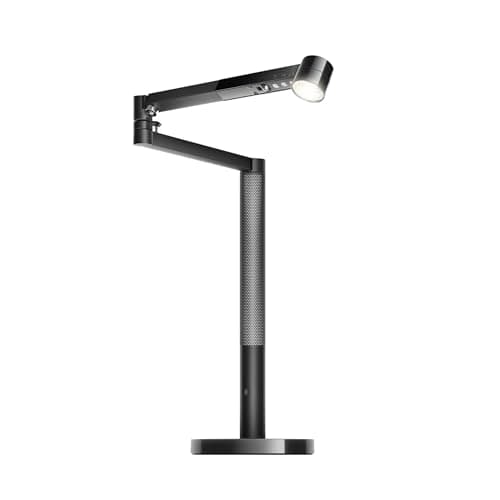 Dyson Solarcycle Morph Desk Light (CD06) The only desk light in our coverage that publishes its rated life as an L70 figure — 181,000 hours to 70% of initial output. Everyone else publishes an hour count with no threshold attached. | A rated life you can actually interrogate | 181,000 hr L70Rated life | |
| 2 | 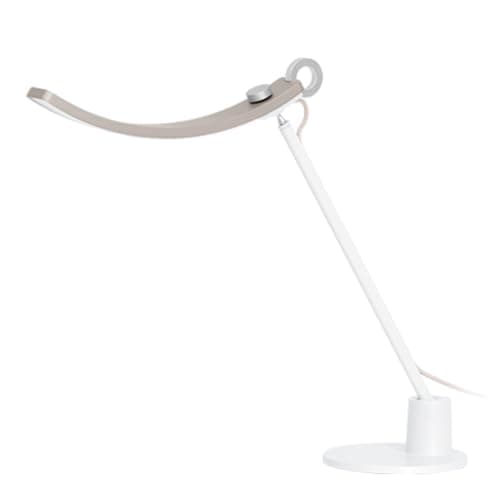 BenQ Genie e-Reading Desk Lamp 50,000 hours, 2700–5700K and Ra≥95 — a mid-priced lamp with a strong color spec and a rated-life figure that cites no standard at all. | Color accuracy at a sane price | 50,000 hrRated life | |
| 3 | 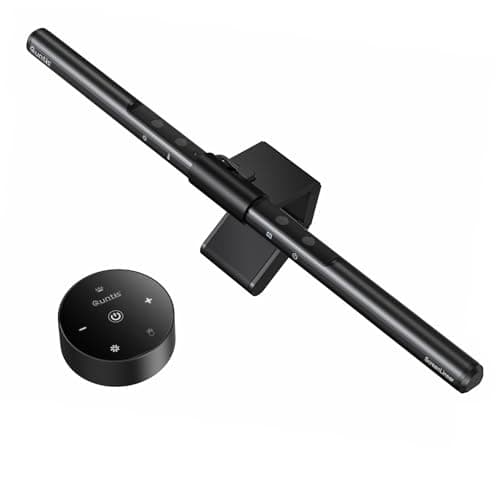 Quntis Monitor Light Bar (Focus 40cm) 40,000 hours on the cheapest fitting in our lighting coverage. The hour count is higher than a lamp costing several times more — which tells you how little an unstandardized hour count is worth. | Showing why the hour count is not the spec | 40,000 hrRated life |
Prices as of October 18, 2026, from Amazon’s API. They change; we show a live number or none at all.
The short answer:far longer than you will own the lamp — the published figures run from 25,000 to 181,000 hours, which at eight hours a day is roughly 8 to 60 years — but almost none of those figures are measurements you can check, and the diodes are not what will kill the lamp anyway. One product in our entire lighting coverage publishes a rated life with a threshold attached.
What a rated life has to say to be a number
LEDs generally do not fail by going dark. They fade. So “how long does it last” is an unanswerable question until someone defines how dim counts as finished — and that definition is exactly what most desk-lighting spec sheets leave out.
L70 is the convention that supplies it: the hours until output falls to 70% of initial. A figure published as “181,000 hr L70” is making a specific, falsifiable claim. A figure published as “50,000 hours” is not making a claim about anything in particular, because it never says what event it is counting or what test produced it.
That is the whole finding of this page, and it is checkable against our own coverage. Across every lamp and light bar we rank, the published rated lives are 181,000 hr L70, 50,000 hr, 50,000 hr, 40,000 hr and 25,000 hr. Exactly one of those five carries a threshold. One of the 50,000-hour figures does not even appear on the product’s own spec page — it comes from a blanket brand FAQ that does not name the model, which we set out in our ScreenBar comparison.
Do the years arithmetic yourself
It is easy and it is the part marketing copy does for you with a flattering assumption. Hours divided by hours-per-day divided by 365:
At 8 hours a day— a working day, every working day, which is already generous for a desk lamp — 25,000 hours is about 8.5 years, 50,000 is about 17, and 181,000 is about 62. At 4 hours a day, double all three.
Which tells you something more useful than the ranking does: for any realistic desk usage, every figure here outlives the product by a wide margin. The rated life is not the number that will decide how long your lamp lasts.
What actually fails
The parts that move, switch or store charge, none of which have a published life figure.
The driver.The electronics converting mains to the diodes’ supply. Nobody publishes a figure for it, and on a cheap fitting it is the obvious cost-down.
The control. A touch panel or dimmer gets used every day. On a monitor light bar it is also the part you reach over your desk to press, which is one of the reasons a wireless controller is worth something.
The hinge.On an adjustable lamp, friction is the whole product. A lamp that will not hold its angle is finished regardless of what the diodes are doing — and a swing arm and a gooseneck fail differently here.
The battery, on a rechargeable. A cell has a cycle life measured in hundreds, not tens of thousands of hours, and no desk lamp we have found publishes one. Rechargeable vs plug-in is the trade-off in full.
Which is why, on this site, the third Spec Line slot on a lamp carries either the rated life or the warranty — whichever is the more honest longevity figure for that product. The warranty is the only number that covers the parts most likely to go.
What to look for instead
In this order. A threshold— an L70 or L80 figure beats a bigger bare number every time. A color spec you can check— CRI with an R9 value, or a modern Rf figure, per what CRI does and does not tell you. A warranty term, because it is the only figure that covers a driver or a switch. And a flicker claim with a method behind it, for the same reason an hour count needs a threshold.
Then stop worrying about longevity and choose on the things that affect your day: how much light you need and what color temperature to run it at.
What we can’t tell you
We have not run any of these lights for 50,000 hours, and neither has anybody publishing a round number. We cannot tell you which driver is built well, whether a particular touch panel survives five years of daily use, or how any of these lamps looks at 80% output. Those need time nobody has yet. What we can do is tell you which figures are claims you can check and which are decoration — see our methodology.
The picks, in detail
1. A rated life you can actually interrogate
Dyson Solarcycle Morph Desk Light (CD06)
The only desk light in our coverage that publishes its rated life as an L70 figure — 181,000 hours to 70% of initial output. Everyone else publishes an hour count with no threshold attached.
- Color temp
- 2700–6500K
- CRI
- CRI 90+ (R9 48)
- Rated life
- 181,000 hr L70
181,000 hours L70 is a different kind of claim from the bare hour counts everything else in this hub publishes. L70 names the threshold: the point at which output has fallen to 70% of initial. A number without a threshold does not say what event it is counting.
It also publishes CRI 90+ with an R9 of 48— the deep-red value that most brands quietly leave out of a CRI headline, as our CRI page explains — across 2700–6500K.
It is also by far the most expensive light here, and a rated life is not a warranty. Nothing on this page tells you the driver, the switch or the hinge will last as long as the diodes.
Good
- The only lamp here that publishes R9 (48 min) — the deep-red sample that Ra excludes and that most affects skin tones
- The only lighting product on this site that names a standard for its longevity number: L70 per IEC 62717
- States its assumption out loud — 181,000 hr is 8 hours a day, and the arithmetic checks
- Widest color temperature range here at 2700–6500K, plus a 1800–3400K docked mode
- Publishes flicker (<1%), beam angle (78°), luminous efficacy (70 lm/W) and rated power (11.2W) — figures most lamp brands never print
Not so good
- Roughly twice the Genie's price
- Its headline CRI (90 or above) is lower than BenQ's Ra>=95
- L70 describes lumen maintenance, not the moment the lamp dies — the driver and electronics are not covered by the figure
- We have not verified IEC 62717's extrapolation limits, so we can tell you the standard is named but not that the projection is conservative
Don’t buy it if: the price is the deciding factor. This is a lot of money for a desk lamp, and the Genie puts a documented Ra>=95 and 1600 lux on your desk for about half. Buy this one because you want the R9 figure and the cited standard, not because it is a Dyson.
Price as of October 18, 2026. #ad — we earn a commission.
Where these numbers came from
2. Color accuracy at a sane price
BenQ Genie e-Reading Desk Lamp
50,000 hours, 2700–5700K and Ra≥95 — a mid-priced lamp with a strong color spec and a rated-life figure that cites no standard at all.
- Color temp
- 2700–5700K
- CRI
- Ra≥95
- Rated life
- 50,000 hr
Ra≥95 across 2700–5700K is the reason to buy this lamp, and it is a published figure you can hold BenQ to. Our desk lamp roundup has it in full.
The 50,000-hourrated life is the part this page is about. BenQ cites no threshold with it — no L70, no L80 — and no test method. That does not make it wrong; it makes it unverifiable, and it means you cannot put it next to Dyson’s 181,000 hours and treat the gap as a measurement.
Good
- Publishes center illuminance with a stated measuring distance — 1600 lux at 45cm — which is a real photometric spec rather than a bare lux claim
- Ra>=95, higher than the Dyson's published figure
- Lights a 90cm width at 500 lux, so it covers a whole desk rather than a pool
- 13 color temperatures across 2700–5700K with an ambient light sensor
- About half the Dyson's price
Not so good
- The 50,000 hr rated life cites no standard, no metric and no test method — we cannot tell you whether it is L70 or something else entirely
- Publishes no R9, so the Ra>=95 figure is a 1974 average with the deep-red sample left out
- Narrower top end at 5700K — it will not reach the 6500K daylight setting the Dyson offers
- Draws max 18W, more than the 11.2W Dyson
Don’t buy it if: you need the lamp to go properly cool. 5700K is the ceiling, and if you are matching a 6500K monitor or a north-facing window, this lamp cannot get there.
Amazon isn’t showing a buyable offer for this one right now.
Price as of October 18, 2026. #ad — we earn a commission.
Where these numbers came from
- BenQ Genie specification page (source of Ra>=95 and 1600 lux at 45cm) — read 2026-07-16
- BenQ Genie product page (source of the 2700-5700K range, 13 color temperatures and the '17 years, 8 hours per day' claim) — read 2026-07-16
- BenQ FAQ — LED lifespan (the blanket source of the 50,000 hr figure) — read 2026-07-16
3. Showing why the hour count is not the spec
Quntis Monitor Light Bar (Focus 40cm)
40,000 hours on the cheapest fitting in our lighting coverage. The hour count is higher than a lamp costing several times more — which tells you how little an unstandardized hour count is worth.
- Color temp
- 3000–6500K
- CRI
- —
- Rated life
- 40,000 hr
This is here to make the page’s argument concrete. It publishes 40,000 hours— fewer than the BenQ Genie but on a fitting costing a fraction as much — and 3000–6500K, with no CRI figure at all.
If an hour count were a durability measurement, the ranking of these three products by price and by rated life would look much more alike than it does. It is not a measurement unless a threshold and a test come with it, which on this product is also true of the missing CRI: the honest version is a dash.
Good
- Cheapest bar here by a wide margin
- Auto-dimming against ambient light
- 40,000 hr claimed rated life — higher than Xiaomi's
Not so good
- Quntis's own page claims Ra98 in marketing copy and Ra90 in the spec section
- Publishes '≥700 lux' with no measuring distance, which makes the figure meaningless
- No published power draw at all
- Narrower 3000K floor — it will not go as warm as the others
Don’t buy it if: you want to know what you are buying. Every number on this product's page is either self-contradictory, missing its units of measurement, or absent.
Price as of October 18, 2026. #ad — we earn a commission.
Where these numbers came from
Common questions
How many years is 50,000 hours of LED desk lamp use?
That depends entirely on an assumption you supply, so do the arithmetic yourself rather than trusting a marketing conversion. At 4 hours a day, 50,000 hours is about 34 years. At 8 hours a day, about 17 years. At 12 hours, about 11. Those are divisions, not specifications — and the figure being divided usually comes with no threshold attached, which is the real problem. The practical read: for any plausible desk usage, the diodes are not what will end the lamp’s life.
What does L70 mean on a lamp spec?
It names the event the hours are counting: the point at which the light output has fallen to 70% of its initial level. LEDs mostly do not fail by going dark, they fade — so “how long it lasts” is meaningless until someone says how dim counts as dead. An L70figure says 30% dimmer. A bare “50,000 hours” says nothing, and the two cannot be compared as though they measure the same thing. In our coverage, exactly one product publishes an L70 figure.
What actually fails first on an LED desk lamp?
Not usually the diodes. The parts that end a desk lamp are the ones that move or switch: the driver electronics, the touch or dimmer control, the hinge or arm friction on an adjustable lamp, and on a rechargeable, the battery— which is why we have a page on rechargeable versus plug-in. None of those have published life figures. The number that covers them is the warranty, which is why the warranty is in our Spec Line wherever a rated life is not the more honest figure.
Is a higher rated life worth paying for?
Only when it comes with a threshold and a test, and usually not on its own. On this page the cheapest fitting publishes 40,000 hours and a mid-priced lamp publishes 50,000 — an hour count does not track price or quality, because without a standard behind it there is nothing stopping it being optimistic. What is worth paying for is a figure you can interrogate (an L70), a color spec you can check (CRI with an R9, or an Rf figure), and a warranty term. Our how to choose a desk lamp page puts those in buying order.
Sources
Every figure on this page comes from one of these. If a manufacturer doesn’t publish a number, we print “—” rather than estimate it.
- Dyson Solarcycle Morph CD06 desk light — specifications (CRI 90 or above, R9 48 MIN, 181,000 hrs, L70 per IEC 62717) — read 2026-07-16
- BenQ Genie specification page (source of Ra>=95 and 1600 lux at 45cm) — read 2026-07-16
- BenQ Genie product page (source of the 2700-5700K range, 13 color temperatures and the '17 years, 8 hours per day' claim) — read 2026-07-16
- BenQ FAQ — LED lifespan (the blanket source of the 50,000 hr figure) — read 2026-07-16
- Quntis Monitor Light Bar Focus 40cm product page (the page that contradicts itself on CRI) — read 2026-07-16
Read next
The best desk lamps for a home office
Where the rated-life figures on this page come from, ranked alongside color temperature and CRI.
The best monitor light bars
The other half of the hour-count spread: 25,000 to 50,000 hours, and which model is actually named in BenQ's FAQ.
How to choose a desk lamp
The buying order: what to check before you get as far as a rated life.
Rechargeable vs plug-in desk lamp
On a rechargeable lamp the battery is the life-limiting part, and nobody publishes a cycle figure for it.
Are LED desk lamps better?
The prior question, including what LED actually changed about desk lighting.