The best desk lamps for a home office
We have not switched either of these on. What we have done is read both manufacturers' own numbers — and found that the lamp with the smaller CRI sticker is the one that shows its working.
By Stephen V.Last reviewed
Quick picks
Ranked, with the manufacturer’s own longevity figure next to each one. Tap a row to jump to the full write-up.
| # | Product | Best for | Longevity | Price |
|---|---|---|---|---|
| 1 | 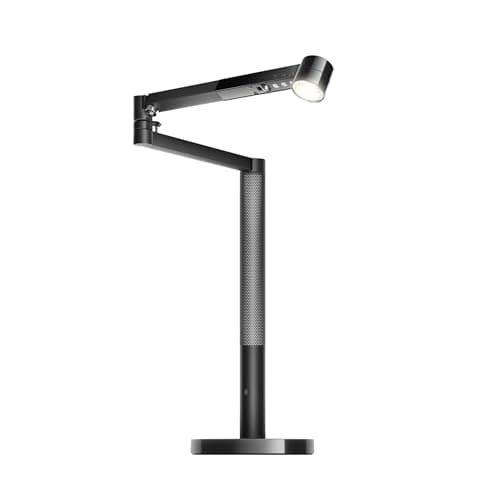 Dyson Solarcycle Morph Desk Light (CD06) Publishes a lower CRI than the BenQ and is ranked first anyway — it is the only lamp here that shows its working. | Anyone who wants the numbers checkable | 181,000 hr L70Rated life | |
| 2 | 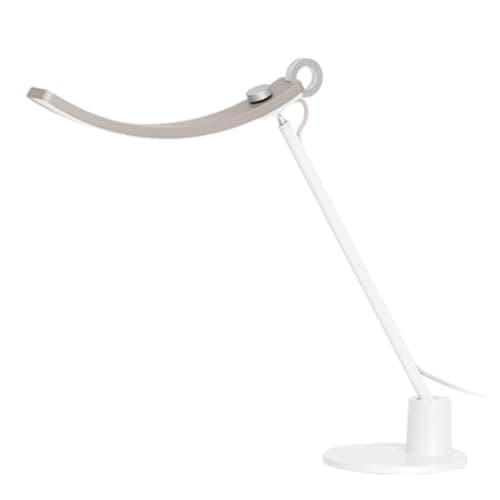 BenQ Genie e-Reading Desk Lamp The bigger CRI sticker, the brighter published figure, and about half the price. What you give up is the ability to check the longevity claim. | Most desks, most budgets | 50,000 hrRated life |
Prices as of October 18, 2026, from Amazon’s API. They change; we show a live number or none at all.
This is a two-lamp list, and before anything else it is worth saying why it is a two-lamp list: almost no desk lamp publishes the numbers this page ranks on. At the budget end, the category is a wall of lamps with no CRI figure, no Kelvin range, and no rated life anywhere on the box or the brand’s own site. There is nothing to compare. We could pad this page to eight entries by copying retailer bullet points, and it would be the same page every other site already published.
So: two lamps that actually publish specifications, ranked on color temperature, CRI and rated life. And the result is more interesting than we expected.
The lamp with the lower CRI won
Dyson publishes “CRI 90 or above.” BenQ publishes “Ra≥95.” The Dyson costs roughly twice as much. On the sticker, that looks indefensible — you are paying a large premium for a smaller number.
Except CRI is a much weaker specification than the marketing around it suggests. Ra is an average of eight low-saturation test colors, and it excludes R9— the deep-red sample. R9 is the one that governs how skin tones, wood and anything red actually render. A lamp can average Ra95 across the eight and still handle red badly, and nothing in the Ra number will warn you.
Dyson is the only lamp on this entire site that publishes R9 at all: 48 minimum. That is not a flattering number, and they printed it anyway. A published 90+ with a stated R9 tells you more than an unpublished 95 with the awkward sample averaged out of the frame.
The deeper problem belongs to CRI itself. The CIE — the international body that definedCRI — has published a position statement saying Ra “does not agree well with overall perceived color rendering” for LED sources, and that the metric needs replacing. CRI was first published in 1965 and last improved in 1974. Every Ra sticker on a 2026 lamp is a 52-year-old formula that its own authors have said in writing is not fit for the light source it is printed on. The statement is free to read and it is in our sources below.
The longevity numbers are not the same kind of thing
This is the part that decided the ranking, and it is the clearest example on the site of why we bother.
Both brands express lifespan the same way — years at eight hours a day. BenQ’s Genie page says the lamp “can stay on for up to 17 years, 8 hours per day.” Dyson says its LEDs maintain light quality for at least 60 years. Superficially these are the same class of claim.
They are not. Dyson states the figure as 181,000 hours, names the metric (L70— the point at which output has faded to 70% of original), names the standard (IEC 62717), and names the assumption (8 hours per day). Every element of that claim can be checked, including the arithmetic: 181,000 ÷ (8 × 365) = 62 years, which supports a marketed 60. It holds up.
BenQ’s 50,000 hours comes from a single blanket FAQ that covers the lamp range and cites nothing at all. No standard, no metric, no method. Run BenQ’s own “17 years at 8 hours a day” and you get 49,640 hours — so the 17-year claim and the 50,000-hour claim are one unsourced figure stated twice, not two pieces of evidence.
We are not accusing BenQ of anything. 50,000 hours is an entirely ordinary figure for an LED lamp and it may well be conservative. The point is narrower and it is not about BenQ: one of these two claims can be verified, and one cannot, and you deserve to know which is which before you weigh them against each other.
What a cited standard does not buy you
Worth being careful here, because it would be easy to overclaim on Dyson’s behalf. L70 measures lumen maintenance — how long until the light fades — not when the lamp dies. The US Department of Energy’s LED Systems Reliability Consortium says this class of data “can predict lumen depreciation but not lifetime,” because the projection assumes the driver, power supply and electronics never fail. In real luminaires, those are frequently what fail first.
And a caveat on our own caveat: IEC 62717 is a different standard from the LM-80/TM-21 pairing that guidance is usually aimed at, and we have notverified its extrapolation limits. So we will state the general warning and stop there. We are not alleging Dyson has stretched anything — we have no evidence of that and would not print the insinuation without it.
The color temperature gap is real
The third published spec is the one people skim past, and it is the only place on this page where the two lamps differ in what they can physically do rather than in what they tell you.
Both start at the same place: 2700K, which is a warm, lamplight-colored white. The difference is the top. Dyson reaches 6500K; the BenQ Genie stops at 5700K.
That 800K sounds like a rounding error and is not. 6500K is roughly the color of indirect daylight from a north-facing window — which is the light most desks are set up around during the day, and the light this site is named after. If you work beside a window and you want your lamp to sit alongside that rather than fight it, 5700K cannot get there. Your desk ends up with two different whites on it, and the warmer one reads as slightly yellow by comparison. The Genie is a 13-step lamp across a genuinely useful range; it simply has a ceiling, and the ceiling is below daylight.
Going the other way, Dyson publishes a second, separate range: 1800–3400K when docked. That is much warmer than anything the BenQ offers — candle-ish at the bottom — and it is a different mode rather than an extension of the main range, intended for when the lamp is parked rather than lighting a task. Whether that is genuinely useful or a feature looking for a job, we cannot tell you. We have not switched it on.
One thing we are deliberately notdoing here. BenQ’s own page attaches a claim to its warm end about the effect of light on melatonin. That may well be sound — there is real science in that area — but it is a physiological claim, we are not qualified to evaluate it, and repeating a manufacturer’s health claim as though we had checked it is exactly the move this site exists not to make. It is BenQ’s claim. We are telling you they make it, and stopping there.
One case where that 800K ceiling decides the purchase rather than nudging it: a room with no window at all. There is no daylight for the lamp to sit alongside, so the only color temperature the room ever sees is the one you set, and the widest tunable range stops being a nicety. Lighting a home office with no windows works through that, and through the three other jobs a window was doing that a desk lamp does not cover.
Why the famous BenQ isn’t here
The BenQ e-Reading lamp is the one people expect on a list like this, and it is deliberately absent. Its Amazon listing dates to roughly 2015, while BenQ’s live page now describes a newer “E-Reading Intelligent” revision. Those are not reliably the same lamp.
We could have put the current spec sheet next to the old ASIN and nobody would have noticed. That is exactly the mismatch this site exists to catch — you would have clicked through expecting the specs on our page and received whatever the decade-old listing actually ships. The Genie has no such problem: its listing and BenQ’s current page describe the same lamp, down to the 13 color modes and the auto-dimming sensor. So the Genie is the BenQ we ranked.
What we can’t tell you
We have not switched either of these on. We cannot tell you whether the Dyson’s arm moves nicely, whether the Genie hums, how either handles a year of being knocked about, or whether the Dyson’s docked 1800–3400K mode is genuinely pleasant or a gimmick. Those need hands, and we do not have them — our methodology sets out exactly what that does and does not buy you.
What we can do is read both spec sheets properly and notice that the cheaper lamp’s headline advantage rests on a metric its own standards body has disowned, while the expensive one quietly publishes the number that metric leaves out. That is worth knowing before you spend anything.
The picks, in detail
1. Anyone who wants the numbers checkable
Dyson Solarcycle Morph Desk Light (CD06)
Publishes a lower CRI than the BenQ and is ranked first anyway — it is the only lamp here that shows its working.
- Color temp
- 2700–6500K
- CRI
- CRI 90+ (R9 48)
- Rated life
- 181,000 hr L70
Here is the thing that made us rank this first despite the lower CRI number. Dyson publishes R9 48 min. Nobody else on this site publishes R9 at all.
CRI (Ra) is an average of eight low-saturation test colors, and it excludesR9 — deep red. R9 is the sample that most affects how skin, wood and anything red actually looks. So a lamp can post Ra95 and render reds poorly, and the Ra number will never tell you. BenQ’s Ra≥95 is a bigger sticker; Dyson’s “90 or above, R9 48 min” is a more complete answer to the question the sticker is pretending to answer.
Then the longevity figure. Dyson states 181,000 hours, and rather than leaving it as a bare number it tells you the metric (L70), the standard (IEC 62717) and the assumption (8 hours’ usage per day). That is three more pieces of information than any BenQ figure on this site carries. And the arithmetic behind the marketed “60 years” checks out: 181,000 ÷ (8 × 365) = 62 years.
We are not going to oversell this. L70 measures lumen maintenance— the point at which the LED has faded to 70% of its original output — and the US Department of Energy’s reliability consortium is blunt that this class of data “can predict lumen depreciation but not lifetime.” It assumes the driver and electronics never fail, which is frequently what fails first. A cited standard is not a promise. It is just the only thing here that can be checked at all.
Good
- The only lamp here that publishes R9 (48 min) — the deep-red sample that Ra excludes and that most affects skin tones
- The only lighting product on this site that names a standard for its longevity number: L70 per IEC 62717
- States its assumption out loud — 181,000 hr is 8 hours a day, and the arithmetic checks
- Widest color temperature range here at 2700–6500K, plus a 1800–3400K docked mode
- Publishes flicker (<1%), beam angle (78°), luminous efficacy (70 lm/W) and rated power (11.2W) — figures most lamp brands never print
Not so good
- Roughly twice the Genie's price
- Its headline CRI (90 or above) is lower than BenQ's Ra>=95
- L70 describes lumen maintenance, not the moment the lamp dies — the driver and electronics are not covered by the figure
- We have not verified IEC 62717's extrapolation limits, so we can tell you the standard is named but not that the projection is conservative
Don’t buy it if: the price is the deciding factor. This is a lot of money for a desk lamp, and the Genie puts a documented Ra>=95 and 1600 lux on your desk for about half. Buy this one because you want the R9 figure and the cited standard, not because it is a Dyson.
Price as of October 18, 2026. #ad — we earn a commission.
Where these numbers came from
2. Most desks, most budgets
BenQ Genie e-Reading Desk Lamp
The bigger CRI sticker, the brighter published figure, and about half the price. What you give up is the ability to check the longevity claim.
- Color temp
- 2700–5700K
- CRI
- Ra≥95
- Rated life
- 50,000 hr
The Genie is a good lamp and the value pick here, and the reason it is second rather than first is worth spelling out because it is the whole argument of this site in one example.
BenQ’s Genie page says the lamp “can stay on for up to 17 years, 8 hours per day.” Do that arithmetic — 17 × 8 × 365 — and you get 49,640 hours, which is the 50,000 hr figure from BenQ’s FAQ wearing a different hat. Same claim, twice.
Now compare the framing to Dyson’s. Both brands express longevity as “years at 8 hours a day.” Only one of them tells you what is being measured. BenQ’s 50,000 hr comes from a blanket FAQthat names no standard, no metric and no test. We do not know if it is L70, L80, or a supplier’s bare assertion. It might be a perfectly sound figure. There is no way to find out, and that is the point.
Credit where it is due on the other side: the Genie publishes 1600 lux at a stated 45cm. A lux figure with a measuring distance is a specification; a lux figure without one is just a number, and plenty of lamps ship the second kind.
Good
- Publishes center illuminance with a stated measuring distance — 1600 lux at 45cm — which is a real photometric spec rather than a bare lux claim
- Ra>=95, higher than the Dyson's published figure
- Lights a 90cm width at 500 lux, so it covers a whole desk rather than a pool
- 13 color temperatures across 2700–5700K with an ambient light sensor
- About half the Dyson's price
Not so good
- The 50,000 hr rated life cites no standard, no metric and no test method — we cannot tell you whether it is L70 or something else entirely
- Publishes no R9, so the Ra>=95 figure is a 1974 average with the deep-red sample left out
- Narrower top end at 5700K — it will not reach the 6500K daylight setting the Dyson offers
- Draws max 18W, more than the 11.2W Dyson
Don’t buy it if: you need the lamp to go properly cool. 5700K is the ceiling, and if you are matching a 6500K monitor or a north-facing window, this lamp cannot get there.
Amazon isn’t showing a buyable offer for this one right now.
Price as of October 18, 2026. #ad — we earn a commission.
Where these numbers came from
- BenQ Genie specification page (source of Ra>=95 and 1600 lux at 45cm) — read 2026-07-16
- BenQ Genie product page (source of the 2700-5700K range, 13 color temperatures and the '17 years, 8 hours per day' claim) — read 2026-07-16
- BenQ FAQ — LED lifespan (the blanket source of the 50,000 hr figure) — read 2026-07-16
Common questions
Why is the lamp with the lower CRI ranked first?
Because CRI is a weaker number than it looks, and Dyson is the only one here filling in the gap. Ra averages eight low-saturation test colors and excludesR9 — deep red, the sample that most affects skin tones. BenQ publishes Ra≥95 and no R9. Dyson publishes “90 or above” and R9 48 min. The second answer is smaller and more honest. Add the fact that Dyson is the only lamp here citing a standard for its rated life, and the ranking follows the documentation rather than the sticker.
Why are there only two lamps on this list?
Because there are only two we can put in a Spec Line. The budget end of the desk lamp market is enormous, and almost none of it publishes a CRI value, a Kelvin range, or a rated life — the three numbers this page ranks on. We are not going to build a table out of retailer bullet points and present it as specifications. A short honest list beat a long invented one, so that is what you are looking at. Our methodology page explains the rule.
Why isn't the BenQ e-Reading lamp here? It's the famous one.
Because its Amazon listing and BenQ’s live product page are not describing the same lamp. The ASIN dates to around 2015, while BenQ’s current page describes a newer “E-Reading Intelligent” revision. Publishing today’s specs against a decade-old listing would mean telling you a lamp has features the one you receive may not have. The Genie does not have this problem — its listing and BenQ’s current page agree with each other — so the Genie is the BenQ we ranked.
Do I need a desk lamp if I already have a monitor light bar?
Probably not, and vice versa. They solve different problems: a bar narrows the contrast between a bright screen and a dim room without throwing light at the screen; a lamp lights the desk, the paper and your hands. Most people need one of the two, not both. Which one depends entirely on whether you still touch paper, and we walk through that in desk lamp vs monitor light bar.
What does 181,000 hours actually mean?
It means L70: the projected point at which the LED has dimmed to 70% of its original brightness, not the point at which it stops working. Dyson measures it per IEC 62717 and assumes 8 hours of use a day, which is how 181,000 hours becomes the marketed 60 years. Treat it as a lumen maintenance projection and nothing more — the US Department of Energy’s reliability consortium notes this kind of data “can predict lumen depreciation but not lifetime,” because it assumes the driver and electronics never fail. In real lamps, they are usually what fails first.
Sources
Every figure on this page comes from one of these. If a manufacturer doesn’t publish a number, we print “—” rather than estimate it.
- Dyson Solarcycle Morph CD06 desk light — specifications (CRI 90 or above, R9 48 MIN, 181,000 hrs, L70 per IEC 62717) — read 2026-07-16
- BenQ Genie specification page (source of Ra>=95 and 1600 lux at 45cm) — read 2026-07-16
- BenQ Genie product page (source of the 2700-5700K range, 13 color temperatures and the '17 years, 8 hours per day' claim) — read 2026-07-16
- BenQ FAQ — LED lifespan (the blanket source of the 50,000 hr figure) — read 2026-07-16
- CIE Position Statement on CRI and Color Quality Metrics (2015) — the body that defined CRI, on why Ra fails for LEDs — read 2026-07-16
- LED Luminaire Lifetime: Recommendations for Testing and Reporting (US DOE / LED Systems Reliability Consortium, 3rd ed.) — read 2026-07-16
Read next
The best lighting for a home office with no windows
Where a desk lamp sits among the four layers a window was doing for free — and why tunable range matters more without one.
How long do LED desk lamps last
Why the Dyson's 181,000 hr L70 figure and everyone else's bare hour count are not the same kind of claim.
Rechargeable vs plug-in desk lamps
Cordless freedom vs a battery that fades — which lasts.
How to choose a desk lamp
Brightness, color, CRI, flicker and mount as one decision.
What is CRI, and why it matters
The color-accuracy number to check on any lamp here, and why a low one quietly tires your eyes.
Are LED desk lamps better?
Why every lamp in this field is LED now — the real gains, and the cheap-LED pitfalls to avoid.
Where to put a desk lamp
Placement relative to your hand and your screen, so it helps instead of glaring.
Color temperature for a home office
What the Kelvin figure on a lamp actually means for desk work, and where the authorities disagree.
Desk lamp vs monitor light bar
Which of the two you actually need. For most people it is one, not both.
The best monitor light bars
If your problem is the screen rather than the desk surface.
Lighting for eye strain
How much light you need — and where OSHA and CCOHS flatly disagree.
Lighting for video calls
The one job where CRI and R9 stop being trivia and start mattering.
Black Friday & Cyber Monday home office deals
What we could and could not verify about lamp discounts in November.
The best splurge home office gifts
The Dyson as a gift, for the one recipient it actually suits.