Steelcase Series 1 vs Gesture
Two chairs from the same company, with the same published weight rating and the same published 12-year warranty, separated by about a thousand dollars. We read both cut sheets: the cheaper chair publishes more of the numbers that decide fit, and the expensive one publishes the mechanism you are actually paying for.
By Stephen V.Last reviewed
The two cut sheets, side by side
Every cell is Steelcase's own published figure for that chair, from the documents cited at the bottom of this page. The em-dash is not an oversight on our part — it is a figure the manufacturer does not publish.
| # | Chair | Seat height | Overall height | Capacity | Warranty | Arms | Price |
|---|---|---|---|---|---|---|---|
| 1 | 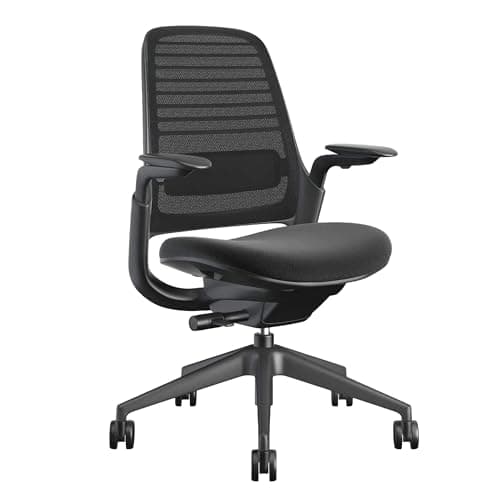 1. Steelcase Series 1 Knowing the chair fits before it arrives
| 16½–21½" | — | 400 lb | 12 yr, parts + labor | 4" width adj. | |
| 2 | 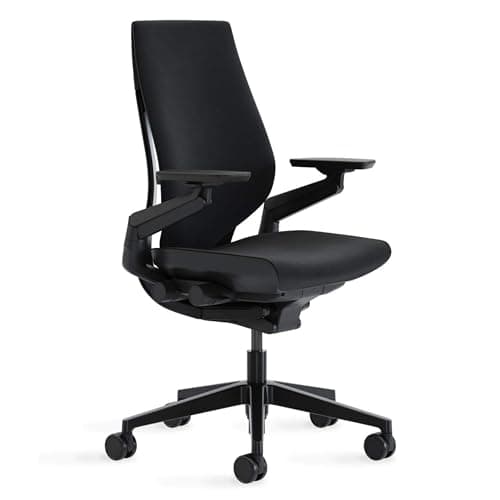 2. Steelcase Gesture Arm posture, and a headrest option
| — | 39.25–44.25" | 400 lb | 12 yr, parts + labor | 360-degree |
The two height columns are different measurements. Seat height is seat-to-floor; overall height is floor to the top of the backrest. Each chair’s document publishes one and not the other, which is why neither column is complete and why we did not merge them into a single “height” column that would have implied they are comparable. Cylinders: the Series 1 spec guide additionally publishes short (14¾–17¾″) and tall (17¼–22″) cylinder options; no equivalent is published for the Gesture in the cut sheet we read. Certifications: the Series 1 cut sheet states BIFMA LEVEL 3 and SCS Indoor Advantage Gold; neither document states BIFMA X5.1 compliance. Dates: the Series 1 figures are from PDFs read 2026-07-16 and the Gesture figures from a cut sheet read 2026-07-26; steelcase.com’s PDFs do not render to automated text extraction, so these are dated reads rather than live ones.
Prices and stock as of October 18, 2026, from Amazon’s API. They change; we show a live number or none at all. #ad — we earn a commission.
These two chairs come from the same company, carry the same published weight rating, carry the same published warranty, and are separated by about a thousand dollars.
That is a strange enough situation to be worth a page of its own, because the usual story — you pay more, you get a longer warranty and a higher capacity — does not apply here. Steelcase publishes 400 lb and 12 years of parts and labor for both the Series 1 and the Gesture. Whatever the extra money buys, it is not longevity on paper.
So we read both cut sheets and put every published figure side by side. The comparison turned up something we did not expect, and it points the opposite way from the price tag.
The finding: the cheaper chair is the better-documented one
The single most useful number when you are buying a task chair is seat height— seat-to-floor, the measurement that decides whether your feet reach the floor and your thighs clear the desk. It is the number OSHA’s own computer-workstation guidance leads with for chairs, and it is the number our desk height calculator exists to give you.
The Series 1 spec guide publishes it: 16½″ to 21½″. Then it goes further and publishes two alternative cylinders — a short one at 14¾–17¾″ and a tall one at 17¼–22″ — which is a manufacturer admitting in print that one range does not fit every body.
The Gesture cut sheet publishes no seat height at all. What it publishes is a “Height” line of 39.25–44.25″, which is the overall chair: floor to the top of the backrest. Those are different measurements. You cannot subtract a backrest to get a seat height, and the one thing the line reliably does is invite people to try.
We flagged this once before, on the best office chairs for tall people, where it cost the Gesture a Spec Line slot. Here it is the whole story: the $500 chair can be specified for your body from published data, and the $1,500 one cannot.
What the extra money does buy
One mechanism, and it is a real one. Steelcase’s Gesture cut sheet describes 360-degree arms, plus a manually adjustable synchro-tilt built to support a range of postures and user sizes, plus an optional integrated headrest that raises overall chair height to 47–57″.
That arm mechanism is the reason the Gesture exists. The pitch for it is the way people actually work now — keyboard, then tablet, then phone, with the forearms landing in a different place each time — and arms that travel further are a genuine answer to a genuine problem. If your shoulders and neck are what hurt at the end of a day, read what office chair armrests are actually for and then take this seriously.
The honest caveat: Steelcase describes the arms rather than quantifying them. The Series 1 publishes 4″ of total arm width adjustmentin inches. The Gesture’s sheet gives the feature a name and not a travel figure, so the headline feature is the one thing on the page you cannot compare numerically. We are not going to pretend otherwise, and nor are we going to pretend the feature is not real because it is unquantified.
What is identical, and why that is the useful part
Three things are the same on both sheets, and each one is a thing people assume scales with price.
Weight rating. Both are stated as weight-tested to 400 lb. That is the highest figure on any chair we rank, and it is the same on both. As office chair weight capacity, explained sets out, that rating is a tested design limit rather than a failure point — but if capacity is why you are shopping Steelcase, the cheaper chair already has all of it.
Warranty. Both publish a 12-year, multi-shift, 24/7 warranty covering parts and labor. The Gesture’s sheet nests that inside Steelcase’s Limited Lifetime Warranty headline, which is marketing language over the top of the same 12-year term. Parts and labor is the part to notice: a warranty that sends you a component and leaves you to fit it is a weaker promise, and most of this category offers that weaker version.
The BIFMA gap. Neither document states X5.1 compliance. The Series 1 cut sheet states BIFMA LEVEL 3 and SCS Indoor Advantage Gold, which are a sustainability program and an air-emissions certification respectively — not the structural durability test people picture when they see a BIFMA mark. We cover that confusion in how to tell if an office chair is good quality. Both chairs publish a tested weight figure, which is a real and checkable claim; an X5.1 statement would be a different and more specific one, and neither sheet makes it.
A note on where these numbers came from
Steelcase publishes good documents and makes them hard for a machine to read. The Series 1 spec guide and cut sheet were read on 2026-07-16 and the Gesture cut sheet (Item #16-0000113, dated 02/25) on 2026-07-26; on 2026-10-10 those same PDFs would not render to automated text extraction, so the figures on this page are dated reads of the manufacturer’s own documents rather than live ones. The dates are printed in the sources below and in the comparison table, which is the only honest way to use a figure you cannot re-fetch on demand. If Steelcase revises a sheet, these figures are what its predecessor said, on the date we say.
What we can’t tell you
We have not sat in either chair. We cannot tell you whether the Gesture’s arms feel like the revelation their reputation suggests, whether the Series 1’s back is firm enough for you, how either one holds up after five years of eight-hour days, or whether a 3-to-4-week wait is worth it. Those need a body and time, and owner reviews will serve you better there than we can. Our methodology is explicit about where our evidence stops.
How to choose between them
Buy the Series 1 unless you can name the specific thing the Gesture does for you. It publishes the same capacity, the same warranty term, a seat-height range, two alternative cylinders and its adjustment travel in inches, for roughly a third of the money. For the large majority of buyers that is not a compromise, it is the better purchase, and saying so costs us the bigger commission.
Buy the Gestureif arm posture is the problem you are actually solving — you move between devices all day, your shoulders are what complain, and you want the 360-degree mechanism and the headrest option. Go in knowing two things: Steelcase does not publish that mechanism’s travel, and its listing was quoting a 3-to-4-week lead time when we checked.
And if seat height is the deciding factor either way, start with the number your own body needs, then compare it against the Series 1’s published range. That comparison is possible on one of these two chairs and impossible on the other, which is the most practical thing this page has to tell you.
The picks, in detail
1. Knowing the chair fits before it arrives
Steelcase Series 1
Same 400 lb rating and the same 12-year parts-and-labor warranty as the Gesture, at roughly a third of the price — and it is the only one of the two whose documentation tells you how high the seat goes.
- Seat height
- 16½–21½"
- Capacity
- 400 lb
- Warranty
- 12 yr
Put the two documents side by side and the Series 1 is the one that answers the question a buyer actually has, which is will this chair fit me.
It publishes a seat-height range — 16½″ to 21½″ — and then it publishes two more cylinders for the people that range misses: short, 14¾″ to 17¾″, and tall, 17¼″ to 22″. That is Steelcase openly conceding that one span does not suit everyone, which is both unusual and useful. If your correct seated height is 15″ or 21″—and plenty of people’s is—this is a chair you can specify rather than hope about.
The adjustment figures are printed in inches too: 2¼″ of lumbar travel, 2¼″ of seat-depth adjustment, 4″ of total arm width. Our seat depth guide explains why the second of those is the one most people underrate.
Good
- Steelcase's spec guide publishes a seat-height range of 16½–21½″ — a 5-inch span, and the figure the Gesture's cut sheet never prints
- Two alternative cylinders are published: a short one at 14¾–17¾″ and a tall one at 17¼–22″, so the chair can be specified for bodies the standard range misses
- "Weight-Tested to 400 lbs" — identical to the Gesture's published rating
- 12-year, multi-shift, 24/7 warranty covering parts AND labor, in the cut sheet — the same term Steelcase publishes for the Gesture
- Publishes its adjustment travel in inches: 2¼″ of lumbar movement, 2¼″ of seat depth, 4″ of total arm width
- BIFMA LEVEL 3 and SCS Indoor Advantage Gold certified, both stated in the cut sheet
Not so good
- The arms adjust in four directions but Steelcase does not describe them as 360-degree arms; if your problem is arm posture rather than seat fit, this is the chair that gives up something
- No integrated headrest option is published for it, where the Gesture publishes one
- No BIFMA X5.1 statement — a LEVEL 3 certification is an environmental and social conformance mark, not the X5.1 durability test, and the two get conflated constantly
- The published figures are from Steelcase PDFs we read on 2026-07-16; the documents do not render to automated text extraction, so they are dated reads rather than live ones
Don’t buy it if: the reason you are looking at Steelcase is the Gesture's arms. Nothing in the Series 1 documentation claims that mechanism, and if you work across a keyboard, a tablet and a phone all day, that is the one thing the extra money actually buys.
Price as of October 18, 2026. #ad — we earn a commission.
Where these numbers came from
- Steelcase Series 1 spec guide (PDF) — source of the 16½–21½″ seat height range, the 2¼″ lumbar travel, the 2¼″ seat-depth adjustment, the 4″ total arm width adjustment, and the optional short (14¾–17¾″) and tall (17¼–22″) cylinders — read 2026-07-16
- Steelcase Series 1 cut sheet (PDF) — source of the 400 lb weight rating, the 12-year multi-shift 24/7 parts-and-labor warranty, and the BIFMA LEVEL 3 and SCS Indoor Advantage Gold certifications — read 2026-07-16
2. Arm posture, and a headrest option
Steelcase Gesture
The arms are the product. Everything else on its cut sheet — 400 lb, 12 years, parts and labor — the Series 1 publishes too, at a third of the price, and the Gesture's document never prints a seat height at all.
- Seat height
- —
- Capacity
- 400 lb
- Warranty
- 12 yr
The Gesture is a good chair with a documentation problem, and the documentation problem is specifically about fit.
Its cut sheet gives a “Height” line of 39.25–44.25″. That is the overall chair: floor to the top of the backrest. It is not seat height, it cannot be converted into seat height, and the substitution is exactly the mistake the line invites. For a seated workstation, seat-to-floor height is the measurement that decides whether your feet reach the floor and your thighs clear the desk — the criteria OSHA’s own workstation guidance leads with — and Steelcase does not print it here.
What the sheet does publish is the reason people want this chair: the 360-degree arms, plus a synchro-tilt mechanism and an optional integrated headrest that takes overall height to 47–57″. If you spend your day moving between a keyboard, a tablet and a phone, arms that follow you are a real thing to want, and this is the chair on this page that claims them.
What it does not do is buy you more capacity or more warranty. Both figures are the same as the cheaper chair’s, from the same manufacturer, in the same document series.
Good
- 360-degree arms, described as such in Steelcase's own cut sheet — the mechanism the chair exists for, and the one thing on this page the Series 1 does not claim
- An optional integrated headrest, published as raising overall chair height to 47–57″
- A manually adjustable synchro-tilt mechanism, described in the cut sheet as built to support a wide range of postures and user sizes
- "Weight-Tested to 400 lbs," the same rating as the Series 1
- "12-year, multi-shift, 24/7 both parts and labor. Limited Lifetime Warranty." — the same 12-year term as the Series 1, inside the same umbrella language
- The source is a dated, item-numbered cut sheet (Item #16-0000113, 02/25) rather than a marketing page
Not so good
- The cut sheet publishes overall chair height — 39.25–44.25″, floor to the top of the back — and NO seat-to-floor height. The figure that decides whether the chair fits your legs is the one figure missing
- Roughly three times the price of the Series 1 for an identical published capacity and an identical published warranty term
- On 2026-10-10 its Amazon listing read "Usually ships within 3 to 4 weeks" rather than in stock — a month of lead time is part of this purchase
- Steelcase describes the 360-degree arms without publishing their travel in inches, so the headline feature is the one thing on the sheet you cannot compare numerically
- No BIFMA X5.1 statement in the document we read — same gap as the Series 1
Don’t buy it if: you need to confirm seat height before you buy. Steelcase's documentation for this chair is excellent everywhere except that number, and if your legs are short or long enough for it to matter, the Series 1 — with its published range and two alternative cylinders — is the chair that can actually be specified for you.
Price as of October 18, 2026. #ad — we earn a commission.
Common questions
Is the Gesture worth three times the price of the Series 1?
For most people, no — and we would rather say that than earn the larger commission. The two chairs publish the same 400 lb weight rating and the same 12-year, multi-shift, 24/7, parts-and-labor warranty. Those are the two figures that normally justify a price gap in this category, and here they are identical. What the extra money buys is the arm mechanism Steelcase calls 360-degree arms, a synchro-tilt mechanism, and the option of an integrated headrest. If you work across a keyboard, a tablet and a phone and your shoulders are the thing that hurts, those are worth paying for. If your problem is that chairs do not fit your legs, the Series 1 is both cheaper and better documented for exactly that.
What is the Steelcase Gesture's seat height?
Steelcase does not publish it in the cut sheet we read, and we are not going to tell you a number it did not print. What the document gives is overall chair height of 39.25–44.25″, measured floor to the top of the backrest, which is a different measurement and cannot be converted. Retailer listings and dealer sites do quote seat heights for this chair; those are not manufacturer specifications, and the whole reason this site exists is that we do not launder them into one. If seat height is a hard requirement for you, the Series 1 publishes 16½–21½″ plus two alternative cylinders, and one chair on our tall-people roundup states a maximum seat height outright.
Do both chairs really have the same warranty?
The same published term, yes. The Series 1 cut sheet and the Gesture cut sheet both state a 12-year, multi-shift, 24/7 warranty covering parts and labor, and the Gesture’s sheet wraps that inside Steelcase’s “Limited Lifetime Warranty” headline. The phrase doing the work in both is parts and labor— a warranty that ships you a component but does not cover fitting it is a materially different promise, and most of this category offers the weaker version. Twelve years of both is the longest coverage we have found on any chair we rank, and it is the same on the $500 chair as on the $1,500 one.
Which one is better for a heavier user?
Neither, on the published numbers: both are stated as weight-tested to 400 lb. That is the highest rating on any Steelcase chair we have specs for, and as we explain in office chair weight capacity, explained, the rating is a tested design limit rather than a cliff edge. If capacity is your binding constraint, the honest answer is that the cheaper chair already has all of it, and the money is better spent on the big-and-tall options that publish a seat height as well.
Does either chair state BIFMA X5.1 compliance?
Not in the documents we read, and the distinction matters because the marks get conflated. The Series 1 cut sheet states BIFMA LEVEL 3 and SCS Indoor Advantage Gold. LEVEL is a sustainability and social-responsibility conformance program; Indoor Advantage Gold is an indoor-air emissions certification. Neither is the X5.1 durability and structural test people assume when they see a BIFMA badge. Both chairs are weight-tested to a published figure, which is a real statement; an X5.1 statement is a different and more specific one, and neither sheet makes it.
Can I buy either of these right now?
Both are live listings, with a caveat on one. On 2026-10-10 the Series 1 listing we link showed as in stock, and the Gesture listing showed “Usually ships within 3 to 4 weeks.”Contract seating moves on contract timelines even when it is sold through a consumer storefront, so a month of lead time on the Gesture is normal rather than alarming — but if you need a chair this week, it is the deciding factor and no spec on this page outranks it. Prices on this page come from the live price layer and are checked daily; the stock language is read at the same time.
Sources
Every figure on this page comes from one of these. If a manufacturer doesn’t publish a number, we print “—” rather than estimate it.
- Steelcase Series 1 spec guide (PDF) — source of the 16½–21½″ seat height range, the 2¼″ lumbar travel, the 2¼″ seat-depth adjustment, the 4″ total arm width adjustment, and the optional short (14¾–17¾″) and tall (17¼–22″) cylinders — read 2026-07-16
- Steelcase Series 1 cut sheet (PDF) — source of the 400 lb weight rating, the 12-year multi-shift 24/7 parts-and-labor warranty, and the BIFMA LEVEL 3 and SCS Indoor Advantage Gold certifications — read 2026-07-16
- Steelcase Gesture cut sheet (PDF, Item #16-0000113, 02/25) — source of the 39.25–44.25″ overall Work Chair height (floor to the top of the back), "Weight-Tested to 400 lbs," the "12-year, multi-shift, 24/7 both parts and labor. Limited Lifetime Warranty," the 360-degree arms and synchro-tilt description, and the optional integrated headrest raising overall height to 47–57″. The document publishes no seat-to-floor height. — read 2026-07-26
- BIFMA standards overview — what the X5.1 general-purpose office chair test covers, and why a LEVEL certification is a different claim from an X5.1 statement — read 2026-07-16
- OSHA Computer Workstations eTool — Chairs (the seat height, backrest and armrest criteria a chair has to meet for a seated workstation) — read 2026-07-16
Read next
The best ergonomic office chairs
Where the Series 1 ranks first, and how it compares with chairs from HON, Branch and SIHOO on the same published figures.
The best office chairs for tall people
Where the Gesture's missing seat height matters most — and the one chair on the site that publishes a maximum seat height outright.
Office chair weight capacity, explained
What the 400 lb rating both chairs share actually means, and what it does not.
How much should you spend on a chair
The general version of this page's question: what each price bracket buys, and where the curve flattens.
What office chair armrests are actually for
Read this before paying for 360-degree arms — it is the feature the Gesture's price rests on.
Seat depth: why it matters and how to set it
The Series 1 publishes 2¼ inches of seat-depth adjustment. This is why that number is worth more than it looks.