The best chairs for sitting all day
Nobody can tell you how a chair feels at hour seven — not us, and not the reviewer who sat in it for twenty minutes. So we ranked on what you can check: how far it adjusts, how much of that is published, and what the warranty says about the cylinder.
By Stephen V.Last reviewed
Quick picks
Ranked, with the manufacturer’s own longevity figure next to each one. Tap a row to jump to the full write-up.
| # | Product | Best for | Longevity | Price |
|---|---|---|---|---|
| 1 | 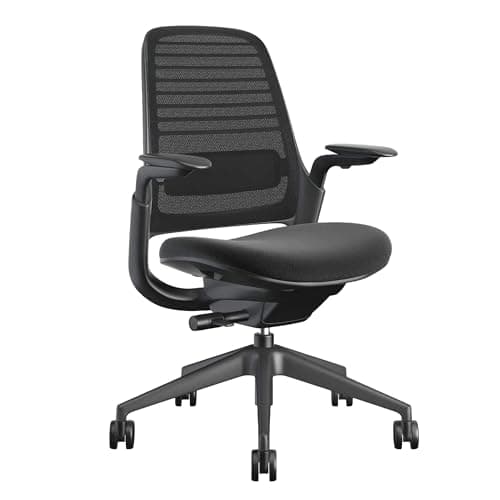 Steelcase Series 1 The only chair here that attaches a number to its seat depth, and the only one whose warranty covers the cylinder for twelve years with the labor included. | Documented adjustment | 12 yrWarranty | |
| 2 | 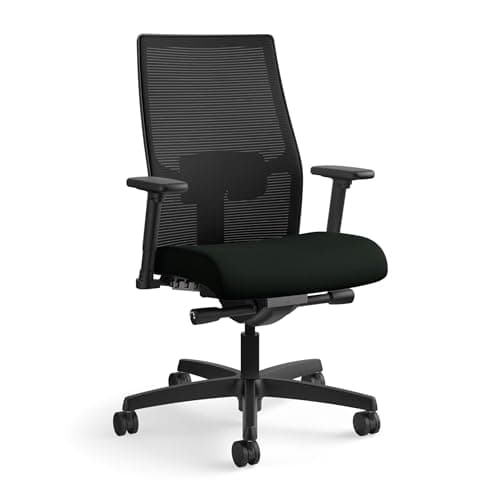 HON Ignition 2.0 (mid-back mesh) Twelve years on the cylinder — the same figure Steelcase publishes, for a lot less. The word on the box is "Lifetime", and that word is doing some work. | The cylinder tier per dollar | LifetimeWarranty | |
| 3 | 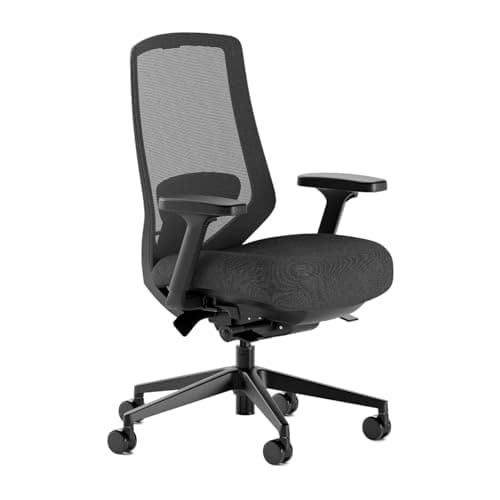 Branch Ergonomic Chair Pro Fourteen points of adjustment, and not one of them published as a distance. Seven years is the shortest cover here on the part most likely to strand you. | Adjustment count | 7 yrWarranty |
Prices as of October 18, 2026, from Amazon’s API. They change; we show a live number or none at all.
The eight-hour day is the hardest thing in this category to review and the easiest thing to fake. Nobody can tell you how a chair feels at hour seven — not us, and not the reviewer who sat in it for twenty minutes at a showroom. Comfort at that distance is not a property of the chair. It is a property of the chair and your body and your desk height and how often you stand up.
So we ranked on the three things that decide whether a chair can be made to fit you and still be there in a decade: how far the seat travels, how much of the remaining adjustment is published as an actual measurement, and what the warranty says about the gas cylinder.
That last one is the unglamorous heart of this page, so let us start there.
The part that fails is the cylinder
The frame outlives everybody. It is a welded piece of steel that will be sitting in a skip in 2060 in perfect condition. The part that actually ends a task chair’s life is the pneumatic cylinder: it stops holding your weight, and the chair you liked in year one becomes the chair that sinks two inches every twenty minutes in year six, and you replace it.
Every brand here warrants the frame generously. Watch what happens to the cylinder:
HONleads with “Lifetime”. Their own warranty page then puts the seating controls and the pneumatic cylinder at twelve years, and textiles at five. Steelcase publishes twelve years, multi-shift, 24/7, parts and labor, as one tier with no cylinder line hiding further down. Branchpublishes seven years on “parts and components” as a single tier, with fabric at three.
Line those up and the ranking on this page more or less writes itself. On the one component that decides how long you own the chair, HON and Steelcase are the same number — twelve — and HON is a good deal cheaper. Steelcase stays first because its twelve includes the labor, and because a warranty that covers the part but not the two hours of fitting it is a different product wearing the same word.
And notice the shape of the trick, because you will now see it everywhere: the longest word in the marketing (“Lifetime”) attaches to the part that never breaks, and the part that does break gets a number in a table. That is not fraud. It is just not an answer to the question you were asking.
Seat depth is the hour-six spec
Seat height gets all the attention, and it should — it decides whether your feet reach the floor. Worth knowing that OSHA’s chairs page does not define it with a number at all, but with a fit test, verbatim: “The chair height is appropriate when the entire sole of the foot can rest on the floor with the back of the knee slightly higher than the seat of the chair.” That is the whole rule. There is no correct seat height in inches; there is only a correct seat height for you, and it is set from your desk. We walk through that in the right order here.
But seat height is an hour-one problem. You notice it immediately, and you fix it with a lever in four seconds. Seat depth is the hour-six problem, and it is the one that makes a chair quietly unbearable over a long day.
The mechanism is pure geometry. The seat pan is a fixed distance from the backrest to the front edge. If that distance is longer than your thigh, one of two things happens: you slide forward and lose contact with the backrest entirely — at which point the lumbar adjustment you paid for is supporting nothing but air — or you sit back and the front edge of the pan meets the back of your knee. No amount of height adjustment moves that edge. Seat-depth adjustment is the only control on a chair that does.
Of the three chairs here, exactly one publishes a seat-depth figure. Steelcase: 2¼″ of travel. HON does not publish one. Branch lists seat depth among fourteen adjustment points and attaches no number to any of them.
To be precise about what that does and does not mean: it is not a claim that the HON and the Branch do not adjust. It is a claim that you cannot find out by how much before the box arrives. On a chair chosen specifically for long days, that is the gap worth pricing.
What “BIFMA certified” does not mean
This is the single most useful thing on the page, and it is free to check. ANSI/BIFMA X5.1 is the standard that a “BIFMA certified” chair claim points at. Here is X5.1’s own scope section, verbatim:
“This standard does not address lounge seating, flammability, surface material durability, cushioning materials, product emissions, or ergonomic considerations.”
The standard says, in its own opening pages, that it does not address ergonomics. It is a safety and durability standard, and the tests are exactly what that sounds like. The seating durability test drops a 57 kg (125 lb) load onto the seat at ten to thirty cycles a minute for 100,000 cycles. The drop test raises a 102 kg (225 lb) bag six inches above the uncompressed seat and lets go. The swivel test runs 60,000 cycles and then another 60,000 under a 122 kg (270 lb) load.
Those are good tests. They tell you the chair will survive a decade of someone dropping into it. They tell you precisely nothing about whether it fits your body — which is the entire question this hub exists to answer.
One more, since we were reading the document anyway: you will see “180,000 cycles” quoted all over the web as the BIFMA seating durability figure. It is 100,000. The 180,000 traces back to a US patent document, not to the standard. And if you want to check whether a specific chair’s BIFMA claim is real rather than decorative, BIFMA runs a public compliance registry and it takes about thirty seconds.
Of the three chairs here: Steelcase says “BIFMA Compliant | BIFMA LEVEL 3”, Branch says it meets BIFMA standards without naming one, and HON makes no BIFMA claim at all. We have not built a BIFMA column, because filling one in would mean inventing it — and because, per the standard itself, it would not answer the question anyway.
What we did, and what it can’t tell you
We read Steelcase’s spec guide and cut sheet, HON’s pricer, functionality guide and warranty page, Branch’s product and warranty pages, and the full text of ANSI/BIFMA X5.1-2017. We pulled the numbers that decide the purchase and cited every one. Where a manufacturer does not publish a number, there is a dash. Our methodology page sets out the procedure, including the part where we say plainly which pages are hands-on and which, like this one, are researched from published specifications.
Which means this page cannot tell you whether the mesh edge digs in at hour six, whether the armrests develop a wobble, or whether the tilt tension is usable for someone your weight. Those need a body in the chair for a month. For that half of the question, owner reviews will serve you better than we can — and a long return window is worth more than most warranties, because it answers those questions with your body inside a fortnight rather than in year five.
How to actually use this
Get your desk height first. Your chair is set from the desk, not from your height — that is the order, and doing it the other way round is why so many people end up with a chair they fight. The desk height calculator takes about a minute and gives you a target seat height.
Then apply OSHA’s fit test to that number: sole of the foot flat on the floor, back of the knee slightly higher than the seat. If a chair’s published range cannot reach it, the chair is out, and the decision is made before price enters into it. If you land near 16″, the Steelcase and its short cylinder are close to the only option on this page. If you land near 21″, all three reach you and the question becomes how long you want to own it.
And if you land somewhere the Branch might or might not reach — well. That is the dash, and the dash is the answer.
The picks, in detail
1. Documented adjustment
Steelcase Series 1
The only chair here that attaches a number to its seat depth, and the only one whose warranty covers the cylinder for twelve years with the labor included.
- Seat height
- 16½–21½"
- Capacity
- 400 lb
- Warranty
- 12 yr
Ranked first on an eight-hour question for a reason that has nothing to do with how it feels after eight hours, because we have not sat in it for eight minutes. It is first because it is the only chair here that answers the eight-hour questions before you buy it.
Seat depth: 2¼″ of travel, published. Lumbar: 2¼″ of travel, published. Seat height: a 5″ range, published, alongside two alternative cylinders — which is Steelcase quietly conceding that one range does not fit everyone, in writing, on their own spec sheet. Nobody else on this page attaches a number to any of it.
And the warranty is one tier rather than four. Twelve years, multi-shift, 24/7, parts and labor, with no separate and shorter line for the cylinder further down the page. That last part is the whole game, and it is the reason the HON below is ranked second rather than first despite the louder headline.
Good
- A 5" seat-height range (16½–21½"), plus short (14¾–17¾") and tall (17¼–22") cylinder options for bodies the standard range misses
- Publishes 2¼" of seat-depth travel — the only seat-depth figure on this page
- Publishes 2¼" of lumbar travel and 4" of total arm-width adjustment as measurements, not adjectives
- 12 years, multi-shift, 24/7, parts AND labor — one tier, with no cylinder carve-out
- 400 lb capacity, 100 lb clear of anything else here
Not so good
- The most expensive chair here
- Steelcase markets a "Limited Lifetime Warranty" umbrella; the figure published for this specific chair is 12 years
- No BIFMA X5.1 statement — though see below for how little that would have told you
Don’t buy it if: you sit comfortably in the middle of every chair you have ever owned and your day is four hours, not eight. The Series 1 earns its money at the edges of the range and over a decade of ownership. In the middle of the range, over four hours, you are paying for precision you will not use.
Price as of October 18, 2026. #ad — we earn a commission.
Where these numbers came from
2. The cylinder tier per dollar
HON Ignition 2.0 (mid-back mesh)
Twelve years on the cylinder — the same figure Steelcase publishes, for a lot less. The word on the box is "Lifetime", and that word is doing some work.
- Seat height
- 17⅛–21½"
- Capacity
- 300 lb
- Warranty
- Lifetime
Read HON’s warranty page rather than HON’s headline. The headline is “Lifetime”. The page says the seating controls and the pneumatic cylinder get twelve years, and textiles get five.
None of that is dishonest — the frame genuinely is covered forever. It is just that the frame is not what goes. Translated into the only terms that matter, HON is offering twelve years on the cylinder, which is exactly what Steelcase offers, for meaningfully less money. That is a real and slightly surprising result, and it is the best argument for this chair. It is also the opposite of what the word on the box implies.
A sourcing note worth your time: HON does not publish one seat height. It publishes one per control type, in a pricer table. The 17⅛–21½″ above is the Y2 — Advanced Synchro-Tilt — row, which is the control this listing names. Across every control the span is 16⅜–21½″. Anyone quoting you a single HON seat height is quoting you one row of a table and not telling you which.
Good
- 12 years on the pneumatic cylinder and the seating controls — matching the Steelcase headline on the parts that fail
- Seat height 17⅛–21½" on the Y2 control, published per control type in a real dimensions table
- 300 lb rating stated outright in the functionality guide, not implied by a listing
- A full lifetime tier does exist on the frame, and frames do occasionally get abused
Not so good
- "Lifetime" is the frame tier. Controls and pneumatic cylinders are 12 years; textiles are 5
- Adjustable lumbar is an option code (AL); the chair also ships with none (NL)
- No published seat-depth travel, no published lumbar travel, no published armrest dimensions
- The 17⅛" floor sits above the Steelcase's, and there is no short-cylinder option to fix it
- No BIFMA claim of any kind
Don’t buy it if: you want to check the adjustment before you commit. HON publishes a seat-height table and a weight rating and then stops. For a chair you intend to sit in for eight hours a day, the number of things you cannot look up here is the real cost.
Price as of October 18, 2026. #ad — we earn a commission.
Where these numbers came from
- HON Ignition 2.0 seating pricer (PDF) — dimensions table, seat height by control type — read 2026-07-16
- HON Ignition 2.0 functionality guide (PDF) — 300 lb user rating, lumbar option codes — read 2026-07-16
- HON warranty — lifetime headline, 12-year controls and cylinder tier, 5-year textiles — read 2026-07-16
3. Adjustment count
Branch Ergonomic Chair Pro
Fourteen points of adjustment, and not one of them published as a distance. Seven years is the shortest cover here on the part most likely to strand you.
- Seat height
- —
- Capacity
- 275 lb
- Warranty
- 7 yr
“14 points of adjustment” is the pitch, and on an eight-hour page it deserves a harder look than it usually gets. Fourteen is a count. What decides whether a chair fits you is the range of each one, and Branch publishes the range of exactly none of them.
Compare like for like: Steelcase says 2¼″ of lumbar travel and 2¼″ of seat depth. Branch says “two-way adjustable lumbar” and lists seat depth among the fourteen. The Branch may well move further than the Steelcase on both. We have no way to know, and neither do you, and that is a strange thing to accept on a chair bought specifically for long days.
Credit where it is due on the warranty, though. Seven years is the shortest term here, but it is seven years on “parts and components” as one tier — there is no cylinder carve-out hiding under a longer headline. Branch is the only brand on this page whose Spec Line number means what it appears to mean.
Good
- 14 points of adjustment, including 5D armrests and a two-way adjustable lumbar
- Branch covers "parts and components" as a single 7-year tier — no separate, shorter cylinder line
- An optional tall cylinder exists for taller users
- Greenguard Gold certified for low VOC emissions
Not so good
- We could not read the seat height from Branch's own served page, so it is a dash
- Not one of the 14 adjustment points is published as a range or a distance
- 275 lb — the lowest capacity here, and not the 300 lb third-party listings repeat
- Fabrics drop to 3 years on the same chair
- "Meets BIFMA standard" with no standard number and no certificate reference
Don’t buy it if: you are buying it for the 14 adjustments. Fourteen is a count, not a capability — a chair with four generous ranges fits more bodies than one with fourteen token ones, and Branch publishes no ranges at all, so there is no way to tell which this is until it arrives.
Amazon isn’t showing a buyable offer for this one right now.
Price as of October 18, 2026. #ad — we earn a commission.
Where these numbers came from
Common questions
What actually breaks on an office chair?
The pneumatic cylinder, which is why we made it the theme of this page. It is the part that slowly stops holding your weight — the chair that sinks a couple of inches every twenty minutes in year six. You can read each brand’s own opinion of that risk straight off its warranty page: HON separates the cylinder out at 12 years from a “Lifetime” headline, Steelcase covers everything for 12 with labor included, Branch covers “parts and components” for 7 with no carve-out. Nobody warrants a cylinder forever. That tells you something.
Does a BIFMA-certified chair mean it's ergonomic?
No — and this is the most useful thing on this page. ANSI/BIFMA X5.1’s own scope says, verbatim, that “This standard does not address lounge seating, flammability, surface material durability, cushioning materials, product emissions, or ergonomic considerations.” It is a safety and durability standard. A chair can pass every BIFMA test in the book and still not come down far enough for you to put your feet flat on the floor.
Why is the Branch seat height blank?
Because we could not read it at the source. Branch does publish it, but in a block that renders in your browser rather than in the page their server sends, so there was nothing to fetch. Search summaries offered us a figure — and the same summaries also told us this chair has a three-year warranty and holds 300 lb, both of which Branch’s own pages contradict. A dash is the honest answer. See our methodology.
Does the right chair mean I can sit for eight hours straight?
Nothing we read supports that framing, and we are not going to sell it to you. The direction the evidence actually points is: sit less, break it up, and move. Cornell’s ergonomics group puts it bluntly — “Simply standing is insufficient. Movement is important to get blood circulation through the muscles.” A well-fitted chair is worth having for the hours you are in it. It is not a license to stay in it. See what the research actually says about sitting and standing.
Is the extra money buying me comfort at hour eight?
We cannot tell you that, because we have not sat in any of these. What the extra money demonstrably buys on this page is documentation and warranty tier: a published seat-depth travel, a published lumbar travel, two alternative cylinders, and parts-and-labor cover. Whether that converts into comfort depends on a body we have never measured. We work through where that money stops buying anything in how much you should spend on a chair.
Sources
Every figure on this page comes from one of these. If a manufacturer doesn’t publish a number, we print “—” rather than estimate it.
- Steelcase Series 1 spec guide (PDF) — seat height, seat depth and lumbar travel — read 2026-07-16
- Steelcase Series 1 cut sheet (PDF) — weight capacity, warranty, certifications — read 2026-07-16
- HON Ignition 2.0 seating pricer (PDF) — dimensions table, seat height by control type — read 2026-07-16
- HON Ignition 2.0 functionality guide (PDF) — 300 lb user rating, lumbar option codes — read 2026-07-16
- HON warranty — lifetime headline, 12-year controls and cylinder tier, 5-year textiles — read 2026-07-16
- Branch Ergonomic Chair Pro product page — 275 lb capacity, 14-point adjustment list — read 2026-07-16
- Branch warranty — 7-year parts and components tier, 3-year fabric tier — read 2026-07-16
- ANSI/BIFMA X5.1-2017 General-Purpose Office Chairs (full text) — scope exclusions and test parameters — read 2026-07-16
- BIFMA standards overview — read 2026-07-16
- BIFMA Compliant registry — check a specific model's claim — read 2026-07-16
- OSHA Computer Workstations eTool — Chairs — read 2026-07-16
Read next
The best office chairs for tall people
Sitting all day is harder in a chair that doesn't fit — the picks ranked for taller and heavier bodies.
Why office chairs sink
The one part that fails on a chair you sit in all day — the gas cylinder, and how to fix it.
How to adjust your chair
Eight hours in a chair you never adjusted is eight hours in the wrong chair. The order matters.
Best ergonomic office chairs
The wider field — including the three chairs that will not tell you how high the seat goes.
How much should you spend on a chair
What the extra money actually buys. Mostly: documentation and a warranty tier.
Standing desk vs sitting
The honest answer to whether you should be sitting for eight hours at all.