The best cable management boxes
A one-product list, and the reason is a string of characters: BS EN 60670-22:2006. It is the only real safety standard cited by any cable product on this site — and you have to read the manufacturer's UK page to find it.
By Stephen V.Last reviewed
Quick picks
Ranked, with the manufacturer’s own longevity figure next to each one. Tap a row to jump to the full write-up.
| # | Product | Best for | Longevity | Price |
|---|---|---|---|---|
| 1 | 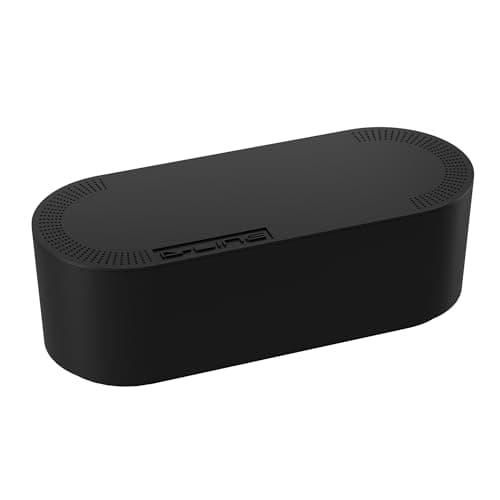 D-Line Cable Management Box (Large) The only cable product on this site that cites a real third-party safety standard — though you have to read D-Line's UK page to find it. | Containing a power strip | BS EN 60670-22:2006Standard | $27.99Amazon $30.19 −7% |
Prices as of October 18, 2026, from Amazon’s API. They change; we show a live number or none at all.
This is a one-product list. That is not because we ran out of time; it is because of a string of characters:
BS EN 60670-22:2006.
That is a named, third-party, verifiable safety standard for enclosures for electrical accessories, and D-Line states its Cable Tidy Unit is safety tested and certified to it. Across every cable product we researched for this site — every tie, clip, sleeve, tray and box — it is the only one that cites a real external standard by name.
In a category where the product is a plastic box containing live mains connections, that fact is worth more than any other spec on the page.
Why a standard matters more here than anywhere else
Most of what we cover is furniture-adjacent. If a monitor arm’s weight rating is optimistic, you find out when your monitor sags. Annoying, recoverable.
A cable box is different in kind. You are putting a power strip, its plugs and several meters of mains cable inside a sealed plastic container and then putting it somewhere you cannot see it. The plastic’s composition is not an aesthetic question at that point.
Which makes the state of this category genuinely poor. The typical listing offers “flame retardant material” — two words, no standard, no document, no test, and in several cases no manufacturer website behind them at all. That phrase is doing an enormous amount of work for something nobody has to substantiate.
D-Line names its material (electrically-safe ABS) and cites its certification. That is a low bar. It is also, in this category, an almost unique one.
The UK/US split
Here is the wrinkle, and it is worth your attention if you are buying in the States.
D-Line’s UK page states that the Cable Tidy Units are made in the UK from electrically-safe ABS and have been safety tested and certified to BS EN 60670-22:2006. Clear, specific, checkable.
D-Line’s US page for the same range does not name a standard anywhere. It describes the boxes as solutions to contain power strips and cord clutter, and that is about the extent of the technical disclosure.
Same company. Same product. Two different levels of information depending on which page you land on.
We are not making an accusation out of this — BS EN 60670-22 is a British and European standard, and it would be odd to lead with it in US marketing. But if you are a US buyer trying to verify what you are getting, your own market’s page will not tell you, and you deserve to know that the claim exists at a different URL rather than assuming the silence means nothing was tested. Both pages are in our sources. Read either.
The two numbers we refused to print
This box comes with two widely-circulated figures that are not on our page, and both omissions are deliberate.
“Holds a power strip up to 13.4 inches.”You will find this everywhere. We could not find it on a single D-Line page. It appears to be retailer copy that has been repeated until it acquired the texture of a specification. It may even be accurate — but we cannot show you where it came from, so it is not going next to figures we can. Instead we give you D-Line’s own external dimensions: 16.5 × 6.5 × 5.25″for the large box, which their UK page publishes in metric as 415 × 165 × 135mm. Those two agree with each other, which is a small reassurance in a category with very little of it.
One caveat on that, in your favor: those are external dimensions. The usable interior is smaller by the wall thickness, and your strip needs room for plugs, which stand proud. Measure your strip with everything plugged in.
“970°C for 2 hours.”This is a glow-wire fire figure that does circulate under the D-Line name, and it is real — but it belongs to D-Line’s separate Safe-D trade range, not to this consumer cable box. The two are easy to blur: same brand, same category, adjacent pages.
Attaching that number to this product would be the most dangerous thing we could do on this entire site. It would tell you a plastic box full of mains connections has a fire rating that it has never claimed, and someone might make a decision on it. So: this box has no published fire rating, because it does not claim one, and a certification for electrical enclosures is not the same thing as a fire rating.
What the standard actually covers — and what it doesn’t
We should be careful not to oversell a string of characters just because it is the only one in the category.
BS EN 60670-22:2006 sits in the 60670 family, which covers boxes and enclosures for electrical accessories— the 22 part concerning connecting boxes and enclosures. That is a real, externally-defined, testable specification, and a manufacturer stating its product is certified to it is making a claim it can be held to. That is meaningfully different from “safety tested,” which is a phrase anyone can type about anything.
What it is notis a fire rating, and the distinction matters because the two get blurred constantly in this category. A certification for electrical enclosures and a glow-wire fire performance figure are different tests answering different questions. D-Line has products that carry the latter — the Safe-D trade range — and this box is not one of them.
The honest limit of our own knowledge, stated plainly: we have notread BS EN 60670-22:2006. Like most standards it sits behind a paywall. We can tell you D-Line cites it by name, which is checkable and which nothing else here does. We cannot tell you what its test regime involves, and we are not going to imply we can by describing it in confident detail we do not have. Naming the standard is D-Line’s claim; verifying our reading of the standard is not something we can offer you, and pretending otherwise would be the same laundering we criticize elsewhere on this site.
What a cable box does and does not do
It contains a power strip and the nest of plugs around it, out of sight and out of the way of feet, pets and vacuum cleaners. It is genuinely good at that, and on a desk stranded in the middle of a room it is doing real work — that is the setup where the strip has nowhere to hide.
It does not make an overloaded strip safe. It does not fix a daisy chain. It is not a substitute for an electrician if something in your setup is warm to the touch. It is a tidy plastic box with a decent certification, and the certification is the reason it is here rather than a competitor.
What we can’t tell you
We have not owned one. We cannot tell you whether the lid stays shut with a fat strip inside, whether the slots take a chunky wall wart, or how the ABS looks after three years in sunlight. Those need hands and time, and we have neither.
What we can tell you is that in a category built on the words “flame retardant” and almost nothing else, exactly one manufacturer names a standard and puts its material in writing — and that the standard is hiding on the wrong continent’s website.
The picks, in detail
1. Containing a power strip
D-Line Cable Management Box (Large)
The only cable product on this site that cites a real third-party safety standard — though you have to read D-Line's UK page to find it.
- Size
- 16.5×6.5×5.25″
- Material
- ABS
- Standard
- BS EN 60670-22:2006
We ranked this because of a string of characters that almost nobody in this category prints: BS EN 60670-22:2006.
That is a named third-party standard for enclosures for electrical accessories, and D-Line says the Cable Tidy Unit is safety tested and certified to it. Across every cable product we researched for this site — ties, clips, sleeves, trays, boxes — it is the only one citing a real external standard by name. Everything else offers adjectives.
There is a catch, and it is a strange one. That claim is on D-Line’s UK page. Their US page for the same product range says the boxes are safety tested and names no standard at all. Same company, same box, two levels of disclosure depending on which side of the Atlantic you are reading from. We are citing the UK page and telling you that is where it comes from, because pretending otherwise would misrepresent what a US buyer can actually verify from their own market’s materials.
Two things we are deliberately not printing. First, the “holds a power strip up to 13.4 inches” line you will find on retailer listings appears on no D-Line page we could find — so we give you D-Line’s external dimensions and let you measure your own strip. Second, D-Line’s “970°C for 2 hours” fire figure belongs to their separate Safe-D trade range, not this box. Those two are easy to blur together, they appear under the same brand, and merging them would hand you a fire rating this product has never claimed. It gets no fire rating from us because it has not asked for one.
Good
- Cites a named third-party standard — BS EN 60670-22:2006 — which nothing else in this category on our site does
- D-Line names the material plainly: electrically-safe ABS, not 'premium plastic'
- Publishes real external dimensions, so you can measure your own strip instead of trusting a listing
- Rear cable entry and exit slots, so the lid closes on a populated strip
Not so good
- The standard appears on D-Line's UK page; the US page says only that the boxes are safety tested, naming nothing
- D-Line publishes external dimensions but not internal ones — the usable space inside is smaller than the numbers suggest
- No published fire rating for this box (D-Line's 970°C glow-wire figure belongs to their separate Safe-D trade range, not this one)
- ABS is a plastic box: it contains clutter and hides a strip, it is not a fire enclosure and does not claim to be
Don’t buy it if: you are buying it as a fire safety device. It is not sold as one and does not claim to be. BS EN 60670-22 is a standard for enclosures for electrical accessories — it is a real, meaningful certification, and it is not the same thing as a fire rating. Buy this to tidy and contain a strip, not to make a bad electrical setup safe.
$30.19 −7%
Price as of October 18, 2026. #ad — we earn a commission.
Where these numbers came from
Common questions
Why is there only one box on this list?
Because only one publishes anything worth ranking. A cable box is a plastic container full of live electrical connections, so the specs that matter are the material and the safety certification — and almost every box in this category offers neither. D-Line names its material (ABS) and cites a standard (BS EN 60670-22:2006). Its competitors overwhelmingly offer “flame retardant material” with no document, no standard and frequently no manufacturer website at all. We are not going to rank four boxes on adjectives to make the page look fuller.
Does a cable box hold a full-size power strip?
Measure yours. You will see “holds a power strip up to 13.4 inches” quoted for this box everywhere — we could not find that figure on any D-Line page, so we are not printing it as though it were a specification. What D-Line does publish is external dimensions: 16.5 × 6.5 × 5.25″ for the large box, which their UK page gives in metric as 415 × 165 × 135mm. Note those are external— the inside is smaller by the wall thickness, and your plugs need room to sit. Measure your strip, with the plugs in, before you order.
Is a cable box a fire hazard? Does it trap heat?
We are not qualified to assess that and will not pretend to be. What we can tell you is exactly what is and is not claimed. D-Line states this box is made from electrically-safe ABS and is certified to BS EN 60670-22:2006, a standard for enclosures for electrical accessories. It does notclaim a fire rating. The “970°C for 2 hours” glow-wire figure you may find associated with D-Line belongs to their separate Safe-D trade range and not to this product — the two get conflated constantly and we are not going to do it. If you have concerns about the load on your strip, that is a question for an electrician, not a box.
Why does the UK page name a standard and the US page doesn't?
We do not know, and we are not going to speculate about a company’s regulatory reasoning. BS EN 60670-22:2006 is a British/European standard, so a US page having less to say about it is not sinister. What matters for you is practical: the certification claim exists, it is first-party, and it lives at a URL in our sources. If you are buying in the US and want to verify what you are getting, D-Line’s US page will not confirm it for you — and you should know that before you rely on it.
Sources
Every figure on this page comes from one of these. If a manufacturer doesn’t publish a number, we print “—” rather than estimate it.
Read next
The best under-desk cable management
For the cables themselves, once the strip is boxed. Three blank spec slots and why.
Trays vs sleeves vs clips
A box is one of four formats. Which one your desk actually needs.
How to hide desk cables
The order to work in — the box comes later than you think.
Desk in the middle of a room
The hardest version of this problem, where a box is doing real work.